By Ojoma Akor
The federal ministry of health in collaboration with other stakeholders have brainstormed on pathways for effective domestic resource mobilization and sustainable health financing in Nigeria.
They said adopting innovative and sustainable approaches was key to strengthening Nigeria’s health system and attaining Universal Health Coverage (UHC).
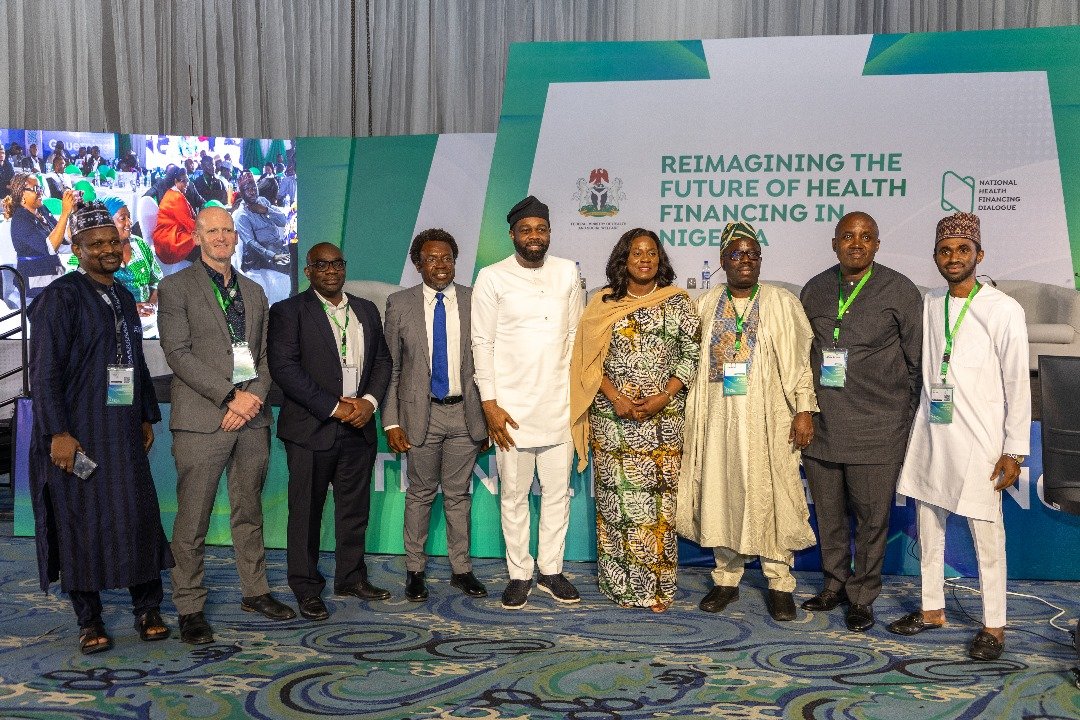
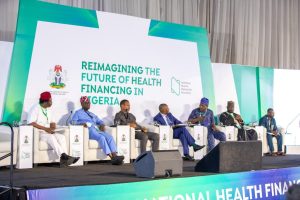
They stated this during the national health financing policy dialogue organized by the ministry, the National Health Insurance Authority (NHIA) and other partners in Abuja. The dialogue was themed “Reimagining the Future of Health Financing in Nigeria.”
The dialogue brought together policymakers, development partners, health financing experts, civil society, media representatives, health insurance providers, private sector players, academia among others.
The Coordinating Minister of Health and Social Welfare, Prof. Muhammad Ali Pate, said the country needs to increase its domestic investment in health, adding that it could not continue to depend on external aid to strengthen its healthcare system.
He said, ” Earlier this year we had the major shock, which I think opened our eyes. The belief that you can get good quality health service without paying for it is an illusion. You have to invest in it. It is an investment. We cannot continue to build a healthcare system on someone else’s taxpayer resources. We must mobilize our own funds, invest more, and make every naira count. Good healthcare anywhere in the world is not cheap, it must be paid for.”
Prof. Pate also enjoined civil society organizations to drive accountability and ensure progress towards UHC.
The Minister of State for Health, Dr. Iziaq Adekunle Salako said that Nigeria spends only about $30 per person in public health financing, with citizens shouldering more than two-thirds of health costs.
He said President Bola Ahmed Tinubu has consistently emphasized that a strong health system is vital for national growth, and has therefore mandated the implementation of several interconnected policies to achieve UHC and protect vulnerable Nigerians.
Dr Salako said under the Presidential Performance Agreement, a key deliverable for the ministry is to enrol at least 44 million Nigerians into the national health insurance scheme by 2030.
He said, ” This will help reduce out-of-pocket expenditure on health, which currently stands at an unacceptably high rate of about 70%. We remain focused on strengthening the framework, expanding coverage, ensuring sustainability, and addressing persistent challenges such as inadequate budgetary allocations, systemic inefficiencies, fragmented programming, and limited reliable data.Our shared responsibility is to ensure that every Nigerian has access to quality healthcare without financial hardship.”
He said Nigeria’s health budget has grown significantly: from ₦434 billion in 2018 to ₦1.2 trillion in 2021.
He said while this represents commendable progress, the 2025 allocation of ₦2.48 trillion—equivalent to 5.18% of the total federal budget remains far below the 15% benchmark set by the Abuja Declaration.
He said the Federal Ministry of Health and Social Welfare remained committed to evolving legislations, regulations, and policies that would ensure effective implementation.
He highlighted that the country must be prepared to learn from best practices in other countries.
“Ghana and Kenya, for example, demonstrate that successful healthcare financing requires political commitment, innovative funding mechanisms, strong legal frameworks, community engagement, decentralized implementation, and expanded coverage. Nigeria aims to adapt such models, strengthen regional collaboration, and apply context-specific innovations,” he added.
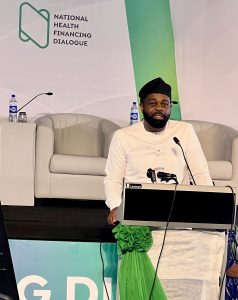
The Director-General of the NHIA, and Chair of the Health Financing Technical Working Group, Dr. Kelechi Ohiri, called for stronger domestic financing as global aid flows decline.
He said the country’s realities are high out-of-pocket expenditure, limited financial protection, and the challenges of a decentralized system that requires better coordination and resource mobilization at both the federal and sub-national levels.
He said achieving sustainable and equitable health financing requires the collective efforts of government, civil society, development partners, the private sector, and academia.
Dr. Ohiri, said the NHIA’s mission aligns with the broader health sector reform agenda of the Minister of Health and the vision of the President, adding, “We are committed to expanding financial protection for all Nigerians by reducing dependence on out-of-pocket payments. Equity remains central to this effort, ensuring that the poor and vulnerable are not left behind.”
While describing the dialogue as timely, he said that the global financing landscape is undergoing multiple transitions.
He explained that this includes a development financing transition that requires greater reliance on domestic resources; a health transition driven by both infectious diseases and the growing burden of non-communicable diseases; and a demographic transition that demands greater investment in health and education to harness the demographic dividend.
Ohiri said at the last World Health Assembly, Nigeria joined other countries in committing to boost domestic investment, reduce fragmentation, and strengthen transparency.
He added that the national health financing policy dialogue, is designed to translate those commitments into actionable reforms, with civil society, private sector, and state governments all central to the process.