By Ojoma Akor
The federal government of Nigeria has, within the last few months, approved over N50 billion to address arrears, allowances, and professional needs across cadres.
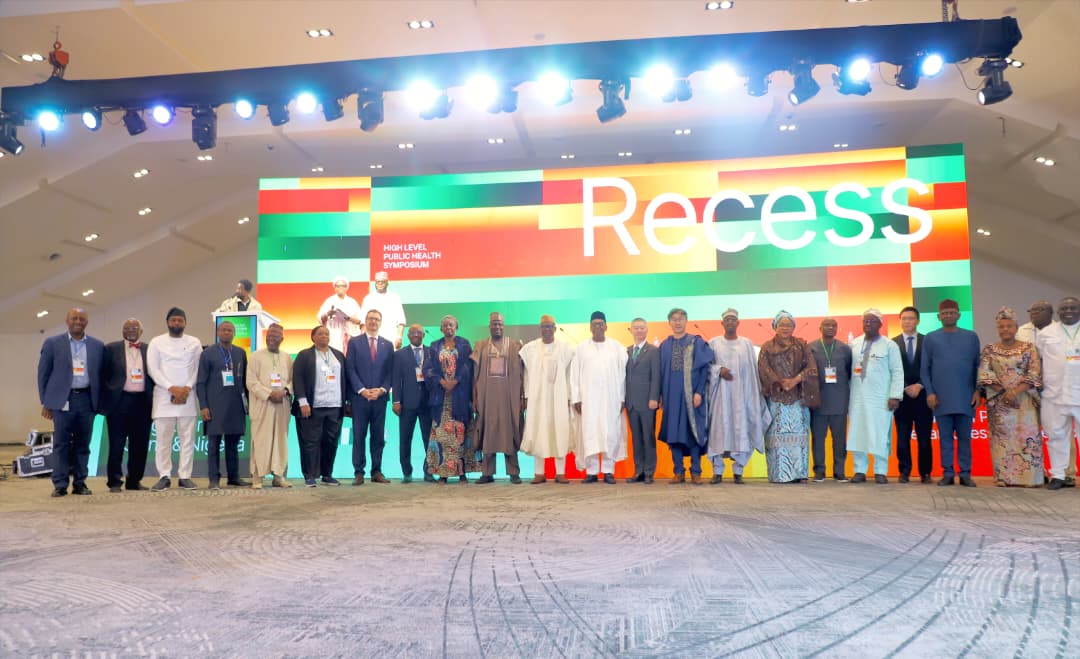
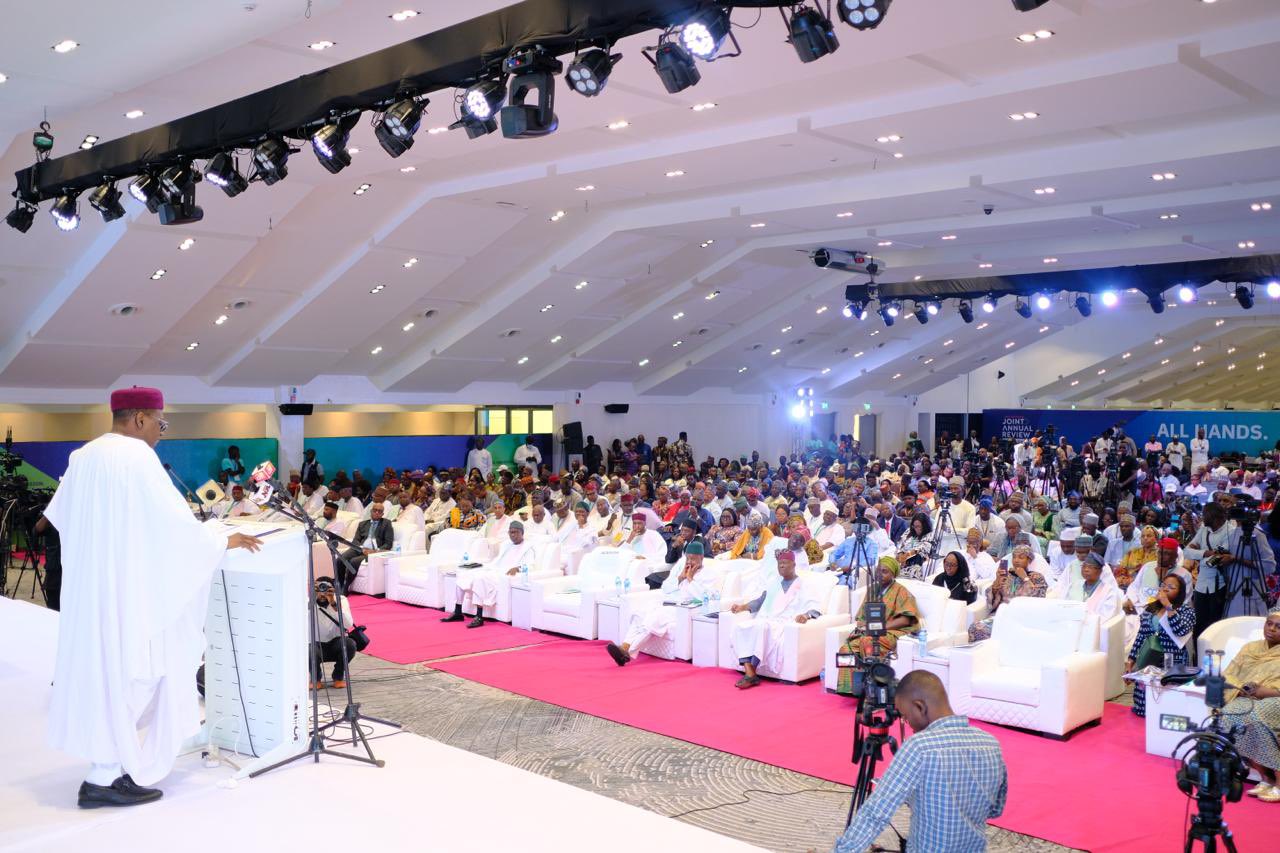
The Coordinating Minister of Health and Social Welfare, Prof. Muhammad Ali Pate, stated this during the 2025 Joint Annual Review ( JAR) meeting in Abuja.
He said in the last year alone, more than 20,000 front-line health workers have been recruited into federal tertiary hospitals to fill longstanding gaps.
He said, “We are constructively engaging with health professional leaders to resolve long-standing issues responsibly. Our call to all health workers is simple: put the Nigerian person at the center of attention. If we do that, all other issues can be resolved.”
The minister said health insurance coverage has also grown, adding, “Two years ago, it stood at around six to seven percent; today, it has reached 12 percent, driven by the implementation of mandatory health insurance and the operationalization of the Vulnerable Groups Fund.”
He said these results show that the measures we have put in place to reduce fragmentation, improve coordination, and enhance national ownership are beginning to yield real results.
“Our task now is to consolidate the gains, sustain financing, and continue expanding health insurance coverage, especially for the poor and vulnerable. We must strengthen the primary health care system, which remains the foundation of our journey to Universal Health Coverage (UHC),” he added.
He highlighted that the proportion of citizens who believe that the government considers their views in health decision-making now stands at nearly half the population.
He said confidence in the overall direction of the health system has risen to 55 percent, while confidence in the government’s capacity to manage health emergencies is now at 67 percent.
According to him, patient satisfaction with healthcare facilities and primary healthcare services remains strong at 74 percent.
He said, ” This is a commendable result, given the challenges our system still faces. However, citizens have clearly indicated that affordability remains a major concern. Access to services is improving, but affordability must improve further. I am pleased to note that, through the commitment of the Ministers of Finance and Budget, plans such as the medical relief programme and expanded social health protection are underway to ease these pressures.”
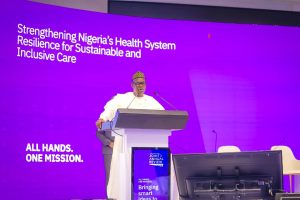
The Minister of State for Health and Social Welfare, Dr Iziaq Adekunle Salako, said the nine- point Renewed Hope Agenda for health, which clearly itemized President Bola Ahmed Tinubu’s health sector priorities is not just a statement of convenience but a covenant of this administration with Nigerians; a commitment to guarantee and safeguard the health of the people, and a determined stance to ensure that Nigerians benefit from the fruits of democratic governance.
He said, “Going into the third year of this administration, alongside sub-national governments and our partners, the Federal Ministry of Health and Social Welfare is implementing and advancing bold reforms as elucidated in the health sector strategic blueprint to address the many challenges faced by the Nigerian health system including workforce shortages, infrastructural deficits, financing gaps, fragmentation and decreasing confidence in the system.”
He said the ministry has put together a roadmap to guide the journey forward, embarked on clear, unambiguous strategic approaches that cut across policy frameworks, collaborative approach, strong implementation, infrastructure development and expansion, manpower optimization, performance benchmarks setting with clear monitoring and evaluation mechanisms, as well as continuous social engagements that ensure that the people remain at the center of the plans.
” Leveraging on the compact signed with the sub-national governments and using the sector-wide approach, we have also significantly addressed siloed implementation of the health agenda for Nigeria, while recognizing the federating structure of our country,” he added.
He also said that the operationalisation of the Nigeria Health Sector Renewal Investment Initiative (NSHRII) is not just an opportunity for expense, but an investment with clear returns.
He said, “We estimate an economic return worth ₦4.8 trillion annually saved from losses to preventable disease recoverable through the blueprint. We are equally poised to achieve a significant reversal in the direction of medical tourism, with the potential to domestically retain an estimated ₦850 billion spent annually by Nigerians on medical tourism abroad. We foresee a massive social return in lives saved, with a potential 50% reduction in preventable maternal and child deaths, advancing equity by closing the almost 19-year life expectancy gap between states. NSHRII implementation will ensure that our health security is strengthened and we have a pandemic-ready health system.”