By Ojoma Akor
The Medical and Health Workers’ Union of Nigeria (MHWU) has called on the Federal Government and all relevant stakeholders to rise towards building a sustainable health system through enhanced wages and improved public funding.
In a communique issued at the end of its 51st regular national executive council meeting in Abuja, Nigeria, the union said the Nigerian health sector is far from the health sector of our dreams, due to infrastructural deficits, inadequate human resources for health, and under funding of the industry.
The union also called on the federal government to step up its action and put in place immediate modalities to cushion the existing economic hardship in Nigeria.
MHWUN also decried the alarming brain drain in Nigeria, occasioned by the continuous migration of the health workforce to developed countries, and its adverse effect on the care economy.
It said, “This has led to a serious shortage of human resources for health in Nigeria, thereby promoting medical tourism and inaccessibility of health care. The NEC-in-Session charges the Nigerian government to re-evaluate the PUSH and PULL factors to retain and attract health workers.”
While expressing concern about the continuous low budgetary allocation to health despite the commitment of various African Leaders in 2001 with a popular declaration (Abuja Declaration) geared towards having a minimum of 15% budgetary allocation to health, the union calls on the Federal Government to make a deliberate effort to live by example in the region and sub-region by respecting this declaration.
President of the MHWUN, Comrade Kabiru Ado Sani, said the theme of the meeting, “Rising together to build a sustainable health system through enhanced wages and improved public funding, “speaks to the conscience that, for a functional health system to be guaranteed, stakeholders must forge a united front to advocate for equitable wages for all healthcare workers. Let this be the standard that guides every decision we make in this Hall. This NEC is the strategic command centre where we must translate this theme from a slogan into a concrete action plan.
He said, “To build a sustainable system, we must first confront the forces of collapse. It is here that we will evaluate our progress, sharpen our strategies, and forge the resolutions that will secure the dignity of every health worker and the future of our nation’s health sector.
“However, we cannot holistically achieve this without taking a critical look at the current state of our nation, which is a determining factor in achieving the desired enhanced wages and improved funding for the health sector, the state of the country. Truly, our nation has continued to grapple with numerous challenges, including insecurity, an unstable economic environment, political tension, collapsed public infrastructure, and the health sector. In fact, hardly any industry in Nigeria is without an unpleasant story to tell.
“The political actors had made several promises, rolled out policies aimed at mitigating these challenges, yet the masses are daily crushed under the heavy burden of these challenges. Specifically, in the health sector, the disturbing indicators remain. We speak often of the Japa syndrome, but we must see it for what it is: the most visible sign of a system that is not sustainable for its workers. When over 60,000 nurses and 19,000 Doctors, along with other healthcare professionals, left Nigeria in the last 20 years, we are talking about doubled workloads and degraded care. Those who remain are not just remaining; they are doing all they can to carry a collapsing structure on their already overworked shoulders.”
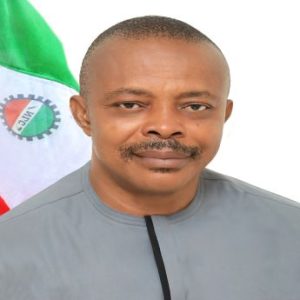
NLC president Comrade Joe Ajaero enjoined health workers not to be satisfied with mere tokens but to demand a fundamental restructuring of the health sector. Demand living wages, safe working conditions, and adequate funding for public health.
He assured the union of the NLC’s support, saying, “ We want to reassure you once again, the NLC stands shoulder to shoulder with you. Your fight is our fight. Together we will heal the healers, and in doing so, we will begin to heal our nation.
He said, “We stand with you today not merely as an affiliate, but as blood kin in the struggle against the exploitation of the working class. The fight you wage in the health sector is the frontline of the battle for the soul and survival of our nation.
“Our health sector continues to bleed. It is not an accident; it is a direct result of a system that prioritizes profit over people, that sees
healthcare as a commodity and health workers as disposable instruments. You, the frontline workers in every Pandemic, the
Pharmacists, the laboratory scientists, the porters; you are the lifeblood of this nation’s well-being, yet you are forced to work in conditions that
sicken the very spirit of healing.
“You are overworked, underpaid, and disrespected. You face unimaginable trauma daily, only to be met with empty promises and a
blatant disregard for your welfare. This is a calculated assault designed to break your will and privatize the common wealth of our public health
system. You have suffered severely from the unfaithfulness of the government to negotiated agreements because premium is not placed
on the services that you render.”
He added that solutions must therefore be as radical as the problems we face; “We must unite and broaden the struggle; forge an unbreakable alliance with all health sector unions. Your strength is in your unity. A joint struggle across the entire health sector is invincible. JOHESU must be reinvigorated by bringing all unions on board.”
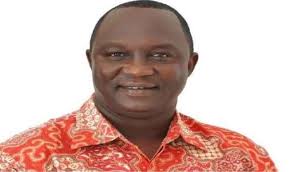
Comrade Ayuba Wabba, immediate past president of the Nigeria Labour Congress and International Trade Union Confederation (ITUC), said Comrade Ali Chiroma was elected the deputy vice president of the Medical and Health Workers Union of Nigeria in 1978, and also elected NLC deputy.
He said, “ Comrade Ali Chiroma led from the front and refused to shy away from speaking truth to power. Comrade Ali Chiroma made a lot of sacrifices for the progress, unity, and solidarity of the labour movement from his mother union, the medical and health workers union of Nigeria, and the Nigeria Labour Congress (NLC), where he rose to the pinnacle of his career.”
He said he was the epitome of courage and character, and that he lived a life of pristine principles and unwavering commitment to advancing workers’ welfare.