By Ojoma Akor
The West African Institute of Public Health (WAIPH), the Federal Ministry of Health, and other stakeholders have said that integrating technology is crucial in effectively addressing non-communicable diseases (NCDs) in Nigeria and across the continent.
They stated this Monday during the 10th anniversary, annual conference and induction ceremony of the Academy of Public Health (APH), a flagship body of WAIPH. It was themed “Digital innovation and shared leadership for Africa’s non-communicable diseases (NCD) response.”
The Director General of the WAIPH, Dr. Francis Ohanyido, said there is a massive burden of NCDS in Nigeria, even though the country seems to be more in the news for infectious diseases.

He said, “If you measure the blood pressure of people on the streets, especially with the state of the economy, you will find out that a lot of them have hypertensive disorders.”
Dr. Francis Ohanyido said lifestyle is also contributing to NCDs. “People don’t exercise as much as they should. They sit down behind desks for hours without doing anything. So, we need to ensure that we get this message out there that there is a problem. And also, for us, involved in implementing this program, that technology provides a perfect platform to be able to drive an agenda for non-communicable disease control.”
He also said there is a link between climate change and non-communicable diseases.
“There are diseases that climate change brings, like cancer of the skin, especially in people who are light-skinned, or people who bleach, so they become more predisposed to cancer. For example, places that, for a long time now, have not known diseases like malaria have suddenly started seeing malaria. If a place gets warm, mosquitoes will thrive there. Certain mosquitoes are beginning to migrate into areas they didn’t previously inhabit. So, these vectors can now transmit new diseases, not only malaria,” Dr Ohanyido said.

Silent epidemic of non-communicable diseases
The World Health Organisation (WHO) Regional Director for Africa, Prof. Mohamed Janabi, in his keynote address, said there is a silent epidemic of non-communicable diseases, and a crisis affecting individuals, families, economies, and health systems across the African region.
He said the story of NCDs is often hidden in clinic records, household finances, and preventable premature death, but that the growing numbers reveal a reality that demands urgent action.
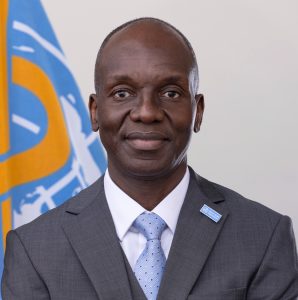
He said, ” Chronic diseases are now one of the greatest threats to Africa’s development. Across the African region, NCDs have shifted rapidly from a secondary concern to a defining health and development challenge.”
The WHO regional boss said scaling up domestic investments could save billions in affordable losses.
He also said digital health technologies could reduce geographic and financial barriers and strengthen continuity of care.
” Stronger surveillance and research systems will support better planning, investment, and accountability. The silent epidemic of NCDs is already shaping Africa’s future, but its trajectory can be changed.
“With stronger systems, earlier detection, and sustainable investment, we can prevent millions of avoidable deaths and protect the well-being of future generations. Thank you for your attention and partnership,” he added.

The Coordinating Minister of Health and Social Welfare, Prof. Muhammad Ali Pate, decried Africa’s decade-long dependence on imported drugs to manage NCDs, adding, “Africa has the power to change the trajectory of non-communicable diseases in the continent.”
He said the federal government of Nigeria is working to address the affordability challenge of critical services, especially for NCDs.
He said that affordability and reforms of the National Health Insurance Authority (NHIA) are key to addressing NCDs.
Virgil Lokossou, director in charge of health care at the West African Health Organization (WAHO), said, “We need to work more together and strengthen our collective networks to have a greater impact on the population. Our populations are counting on us to make good choices and to provide sound advice to our political leaders. And we believe by doing so, we can be more impactful and stay stronger together for a brighter future.”
He said WAHO is happy to enter into a partnership with the WAIPH to strengthen the capacity of young people and support public health programs in the African region.

Regional director of the Africa CDC West Africa Coordinating Centre, Alinon Kokou, said digital innovation and NCDs are top priorities for the Africa CDC at the continental and regional levels.
Represented by Chioma Dan-Nwafor, Senior Technical Officer for the Africa CDC, West Africa Regional Coordinating Centre, he said Africa CDC has developed strategies to address NCDs and strengthen digital health.
He said, “So in terms of digital health, we also have a strategy for African digital innovation to strengthen and digitalize health in Africa. ”
She said countries in the region need to look inwards to address health financing challenges, especially amid dwindling funding from external sources.
Dr. Osita Okonkwo, country director, Nutrition International, said that there has been a rising number of NCD cases in the region, occasioned by multiple factors. He added that one of the significant concerns regarding NCDs is nutrition.
He said, ” At Nutrition International, we are focusing on ensuring that the government takes action and invests more effectively in providing appropriate access to nutrition. We are also looking at how to ensure that the government makes appropriate investments. We have developed a cost-benefit tool that helps the government assess the benefits of investing in nutrition. Where you put $1, you get $23 as a benefit.”
He said the organization has also produced a couple of support items and tools to ensure that domestic resources are mobilized.
He said there is also a need for greater government and partner investment in nutrition, as well as greater stakeholder engagement to ensure the government is held accountable for those investments.
He said, “We are also calling on the legislature to make nutrition a focus for government investment. When the government invests in food protection, let it be nutrition-specific and health-sensitive.
“Let there be appropriate tracking tools to help us ensure that the government is doing enough on nutrition. We feel that every child in Nigeria deserves appropriate nutrition. Every pregnant woman in Nigeria deserves appropriate nutrition during pregnancy to improve pregnancy outcomes. No child needs to go to bed hungry. No child in Nigeria needs to suffer from stunting, wasting, or other nutritional issues.
“We want to see a reversal in the stunting values in Nigeria. And that can happen only when the government takes nutrition investment seriously. That is why, at Nutrition International, we are encouraging the government and advocating for more investment in nutrition by the government and all involved.”
Dr Okonkwo was also inducted as a fellow of the African Academy of Public Health, noting that it is a top-ranked, top-rated recognition for excellence in public health programs and career expertise in public health organizations.

Why stakeholders should leverage digital health to advance health systems
Ademuyiwa Damilola, Director of Programmes for the Legislative Initiative for Sustainable Development (LISDEL), said it is essential for not just the government but all partners to rally around to mainstream digital initiatives and advance health outcomes in Nigeria.
He said, “It is exciting for the West African Institute of Public Health to take this initiative and convene partners to talk about digital initiatives, especially for screening, control, and other interventions. There are several angles to this. You could talk about using digital platforms for advocacy, screening, service delivery, and even tracking patients.
You could also use digital platforms to make decisions. Stakeholders in the health sector need to begin to think outside the box on how to leverage digital tools to advance Nigeria’s health system.”
He further said that several nations are leveraging digital health to advance their health systems, and that Nigeria should do the same.
“I think a critical area we could start with is policy integration.
There needs to be a policy that specifies how we want to use it to advance health systems. We also need to bring in the youth.
“We need a platform that enables us to leverage the strengths of multiple stakeholders. Some partners are tremendous on digital initiatives. We need to harness all available opportunities to integrate digital initiatives into our health programs in Nigeria.”

Highlights of the conference were the Investiture of the 2025 Distinguished Fellowship of the Academy of Public Health (DFAPH) to four eminent Africans: Nigerian Coordinating Minister of Health and Social Welfare Prof. Muhammad Pate, Prof. Sheila Tlou, Prof. Agnes Binagwaho, and Dr Ahmad Ogwell.