By Ojoma Akor
The Patient Advocacy Working Group (AWG) for NCDs Financing in Nigeria has called on the federal government to release the 2025 non-communicable disease budget urgently.
The group comprising patients with hypertension from across the country, in alliance with Civil Society Organizations (CSOs) and health professional communities, also called on the government to urgently deliver the universal health coverage (UHC) promises for them.
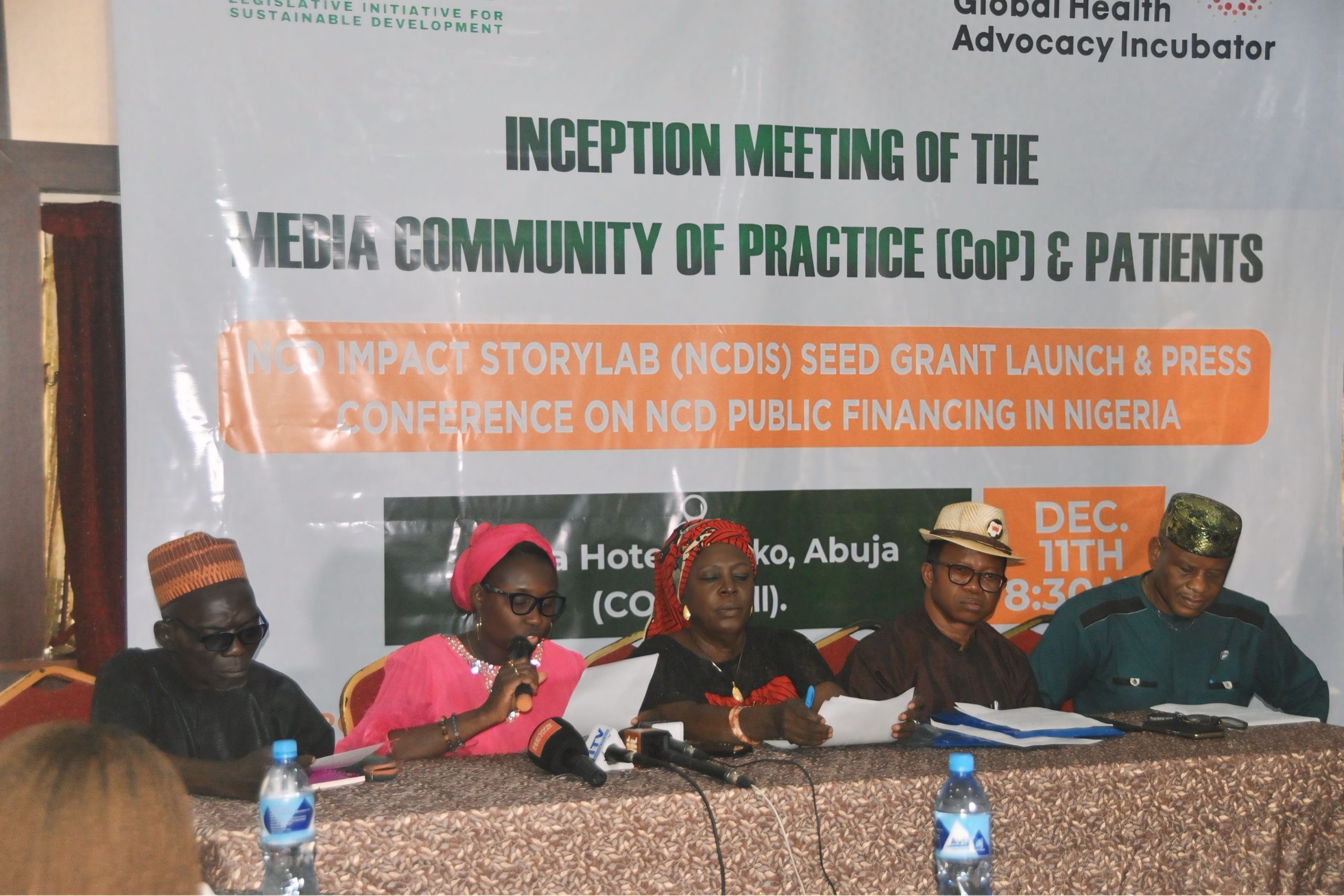
The advocacy group made the call while briefing newsmen during the inception meeting of the NCDs Media Community of Practice (CoP) and the NCDIS Seed Grant Launch. The meeting was organized by the Legislative Initiative for Sustainable Development (LISDEL), with support from the Campaign for Tobacco-Free Kids – Global Health Advocacy Incubator (CTFK–GHAI).
The meeting was themed “Strengthening Media Leadership for Improved Hypertension and NCD Financing in Nigeria.”
Their call comes as Nigeria joins the rest of the world to mark this year’s UHC Day.
Ijeoma Joseph and Maimuna Barau, who spoke on behalf of the group, called on the Nigerian government to urgently translate its commitment to health into concrete, life-saving action for NCDs.
They said NCDs, including hypertension, diabetes, cancers, and chronic respiratory illnesses, pose some of the greatest threats to Nigeria’s human capital and economic prosperity.
“NCD patients in Nigeria bear one of the largest shares of public health burdens. One-third of Nigerian adults have one or more NCDs, and less than 20% have access to diagnosis and treatment. The rise in NCDs aligns with targets set in the 2019-2025 multi-sectoral plan to increase diagnosis and treatment coverage to 80% and reduce mortality by 25%,” they said.
The patients also said that only 6% of the already insufficient health budget is allocated to NCDs.
“As we have now learned, nearly none of the budgeted activities in the 2025 budget have been executed. These activities range from erecting new cancer facilities, eye centres, medical outreaches for hypertension and diabetes screening and treatment, as well as health workers training,” they said.
While saying that this development defies the spirit of UHC, they said UHC is built on the collective understanding of social impacts on health.
They said, “For many Nigerians, lack of adequate health education, household income, lack of access to early screening, and high cost of medicines exacerbated by economic policies have a combined impact on the incidence and management of chronic diseases. This vulnerability is what Nigeria and the rest of the world have agreed to protect against through the UHC Agenda. Patients have been on the sidelines for so long as policies and budget decisions are made on their behalf, but the era of silence is over. Now is the moment to convert political will into sustainable financing for prevention, early diagnosis, and treatment.”
AWG further called on the federal government to swiftly release all NCD budget lines in the 2025 budget, enabling prompt implementation by all relevant agencies.
It called on the legislative and executive arms to work to ringfence SSB Tax to finance Special NCD Interventions:
“We commend the Senate and the Coordinating Minister of Health, Prof Muhammad Pate, for supporting an increase from the token N10 per liter to a more effective rate, such as N130 per liter or at least 20% of the retail price, “the advocacy group added.
The group also harped on the need to strengthen NCD care in Nigeria’s UHC efforts, “With 70% of health spending coming out-of-pocket, millions delay or abandon treatment for life-threatening NCDs. We call for the following policy change. Expand NCD benefit packages: The National Health Insurance Authority (NHIA) and Basic Health Care Provision Fund (BHCPF) must rapidly scale the inclusion of NCD screening, diagnostics, and treatment in their benefit packages. “Half of adults with diabetes remain undiagnosed, and only one in five individuals with hypertension has their condition under control.”
The Patient Advocacy Working Group also called on the government to strengthen primary healthcare (PHC). PHC facilities must be equipped and staffed to deliver basic NCD prevention and management, supporting 90% of essential UHC interventions, it said.
“We call on President Bola Ahmed Tinubu and the National Assembly to demonstrate decisive leadership by increasing NCD funding, establishing a dedicated hypertension budget line, mandating earmarking of SSB tax revenue, and ensuring NCD services are comprehensively integrated into UHC. The health and future of 230 million Nigerians depend on the decisions made today, ” the group said.
Dr Ndaeyo Iwot, General Secretary of the Health Sector Reform Coalition and Chairman of the Regima Community Care Foundation, said allocations mean nothing without timely release.
He said, “At least 40 per cent of SSB tax revenue should support prevention, essential medicines, diagnostics, and service delivery.”
Also speaking during the inception meeting of the NCDs Media Community of Practice, Dr Mark-Anthony Okoli of the NCD unit, National Primary Health Care Development Agency (NPHCDA), applauded LISDEL and other partners, saying the Advocacy Partnership for Hypertension Financing and Patient Voice (APH-FiP) Project in Nigeria would strengthen collaboration among media professionals, civil society, and stakeholder in the health sector.
He said, “The launch of the NCDs Media Community of Practice and the Seed Grant would empower journalists with the knowledge, tools, and professional networks needed to deliver accurate and impactful reporting on NCD financing and public health reforms.
“A more informed and engaged media landscape will strengthen public awareness, enrich policy conversations, and promote accountability in health-sector spending.”
The highlight of the event is the inauguration of the NCD Media Community of Practice (CoP), an organized network of journalists dedicated to sustained, evidence-based reporting on health financing and the launch of the NCD Impact StoryLab (NCDIS).