By Ojoma Akor
The Nigerian Cancer Society (NCS) says the country still needs stronger integration of cancer prevention and care into its primary health system.
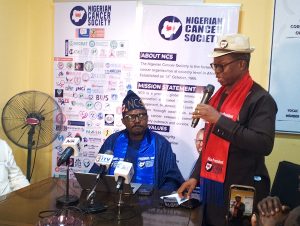
NCS President, Prof. Abidemi Omonisi, made the call on Tuesday in Abuja while briefing newsmen ahead of this year’s World Cancer Day and the launch of the Advancing Prostate Cancer Discoveries, Engagement, Awareness and Policy Action (DEAP) project.
He said over the years, Nigeria has made important strides in cancer care such as increased awareness, stronger advocacy, the expansion of cancer registries, the establishment of National Institute for Cancer Research and Treatment (NICRAT), the development of robust policies on cancer, the establishment of National Cancer Health Fund, and growing attention to cancer control at national and subnational levels.
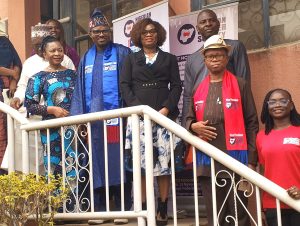
Prof. Omonisi said Nigeria is also among the few African countries with an up-to-date National Cancer Plan, adding that these achievements must not make the country complacent.
He said, “We still have far too many people presenting late. We still see families pushed into poverty by the cost of care. We still face shortages in oncology services, diagnostic capacity, and trained health workers.”
The NCS president said cancer is not just a medical condition but a human experience.
“It affects how people live, work, love, and dream. Behind every statistic is a person: a mother trying to stay strong for her children, a young man facing an unexpected diagnosis, a family navigating fear and uncertainty, a survivor rebuilding life after treatment,” he said.
He added that, yet, for too many Nigerians, the cancer journey is made harder than it should be by late diagnosis, limited access to screening, high out-of-pocket costs, stigma, and unequal access to quality care.
He said, “The truth is: many cancers are preventable. Many are treatable. And many lives can be saved if we act early, act together, and act decisively.”
The expert said World Cancer Day reminds us that no single institution, profession, or sector can address the challenge alone.
He said the government must continue to show leadership through policy, financing, and accountability, and that health professionals must remain committed to evidence-based, compassionate care.
He further said that researchers must generate data that reflects our realities.
“Civil society must keep amplifying community voices. The private sector has a role to play. And communities themselves must be empowered with knowledge, trust, and access,” he stated.
Prof Omonisi also said that the NCS will continue to advocate for equitable cancer care.
He said, “We will continue to promote prevention, early detection, and public education. We will continue to support research, data systems, and capacity building. We are committed to protecting the rights and privileges of cancer patients and survivors. Cancer patients and survivors are at the heart of everything we do.”
He said cancer survivors are living proof that cancer does not define the end of the story, noting that their voices give courage to others, while their resilience inspires us all.
He highlighted that this year’s World Cancer Day commemoration will be held simultaneously across all 36 States in Nigeria and the Federal Capital Territory.
He explained that the various activities include ministerial press briefing, press statement by the NCS President, free cancer screening of breast, prostate and cervical cancers, launching of the Strategic Cancer Control Plan (2026- 2030), cancer walks, courtesy visits, support for cancer patients and survivors, public lectures and symposia, the NCS and its strategic partners namely, National Cancer Control Program, Federal Ministry of Health and Social Welfare; and the National Institute for Cancer Research and Treatment (NICRAT) will also be organizing regional mega rallies and cancer screening in Nigeria across the six geopolitical zones in Nigeria.
He said, “The 2026 World Cancer Day commemoration and regional mega rallies will be concluded by an international press conference by the President/CEO of the Nigerian Cancer Society in early March 2026.
“As we mark the 2026 World Cancer Day today, let us move beyond awareness alone. Let us move toward action, equity, and impact. Let us replace fear with facts, silence with conversation, and delay with early care. Let us build a Nigeria where a cancer diagnosis is not a death sentence, and where access to quality care does not depend on where you live or how much you earn. Together, though each of us is unique, we stand united in hope, in courage, and in the pursuit of changing the cancer story in Nigeria.”
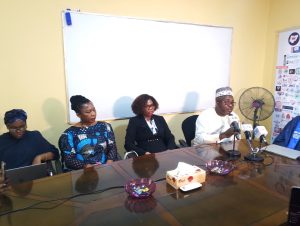
Folakemi Odedina, a Professor of Hemato-Oncology at Mayo Clinic, USA, who spoke on behalf of the Prostate Cancer Transatlantic Consortium and the ICARE Consortium, said there is a need for people of African ancestry to be very well represented in clinical trials.
She said, “If our populations are not represented in clinical trials, the therapies, devices, and everything that we use to address this deadly disease will be like shooting in the dark and hoping everything works. “
She said she is excited that the ICARE consortium is partnering with the NCS.
The ICARE consortium is funded by the US Department of Defense and partners with the Mayo Clinic Comprehensive Cancer Center and other organizations.
She added that more than $25 million in funding is available to address prostate cancer globally.
“With this amount of funding comes great responsibility, and although the focus of the ICARE consortium is to have scientific discoveries and to ensure that all the interventions that we have are evidence-based through research, one of the areas that is really critical, which we are so proud of, is the collaboration with NCS. It is the idea of turning scientific discoveries into policy —not only for Nigerians, but also for policies that will impact Nigerians in the diaspora and Africans in the diaspora—and disseminating these discoveries directly to the public to foster public impact.
“On behalf of the ICARE consortium, we are proud to announce a very strategic partnership with the NCS to strengthen prostate cancer awareness, research, dissemination, community engagement, and policy action in Nigeria, across Africa, as well as globally.”
She further said prostate cancer is one of the most common cancers affecting Nigerian men and black men. Yet, many cases are diagnosed late due to low awareness, limited screening gaps, and the poor representation of African men in clinical trials.
She said the partnership is designed to change that, adding that,” It’s very strategic, because through this initiative, which is titled advancing prostate cancer discoveries, engagement, awareness, and policy deep action, the Nigeria Cancer Society will serve as the ICARE lead partner for national outreach, stakeholder engagement, and policy advocacy.
Odedina said, “The project will be led at the NCS by Professor Abidemi Omonisi. Our focus is simple but critical: ensuring that the scientific discoveries generated by the consortium translate into real public health impact. This means sharing evidence with communities and policymakers, engaging with government agencies, healthcare professionals, civil society, the media, and traditional leaders, and promoting allied detection and stigma reduction. Over the next few years, we will roll out the national awareness campaign, host stakeholder forums, and train journalists. We look forward to developing policy briefs and convening a national prostate cancer summit. Through this process, community voices will remain central to our work.
” Ultimately, this unique partnership between ICARE and the NCS is all about one thing: for us to save lives, to save the lives of men that are affected by prostate cancer by ensuring early detection, better informed policy, stronger national action against prostate cancer, and inclusion in clinical trials.”
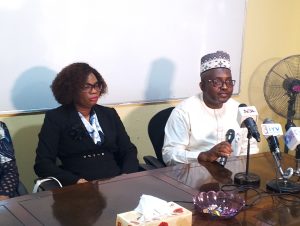
The Director General of the National Institute for Cancer Research and Treatment (NICRAT), Professor Usman Malami Aliyu, said the institute has received tremendous support and unwavering commitment from the NCS to advance cancer research and prevention and to bridge gaps in research practice and policy.
Represented by the Director of Cancer Prevention and Control at the Institute, Dr. Usman Mohamed Waziri, he said the agency has been working assiduously to boost cancer research, adding that with the coming of the institute, for the first time, the Nigerian government is dedicating funds towards building capacity, strengthening data quality, as well as ensuring the country has young researchers that are dedicated and focused on cancer research.
He said the federal government is rolling out national cancer screening programs and cancer treatment centres across eight facilities nationwide.
He added that access to quality care and late presentations were major hindrances to improving quality.
Dr Uche Nwokwu, National Coordinator of the National Cancer Control Programme (NCCP) at the Federal Ministry of Health and Social Welfare, said the ministry was working to address challenges in cancer screening, diagnosis, treatment, research, and clinical trials.
He said the national cancer control plan provides a comprehensive outline of the government’s cancer care strategy.
He added that the federal government has also approved linking the NIN to cancer screening nationwide.