By Ojoma Akor
Stakeholders in the health sector have called for greater adoption of the Ethical Health Financing (EHF) model to address health financing challenges in Nigeria.
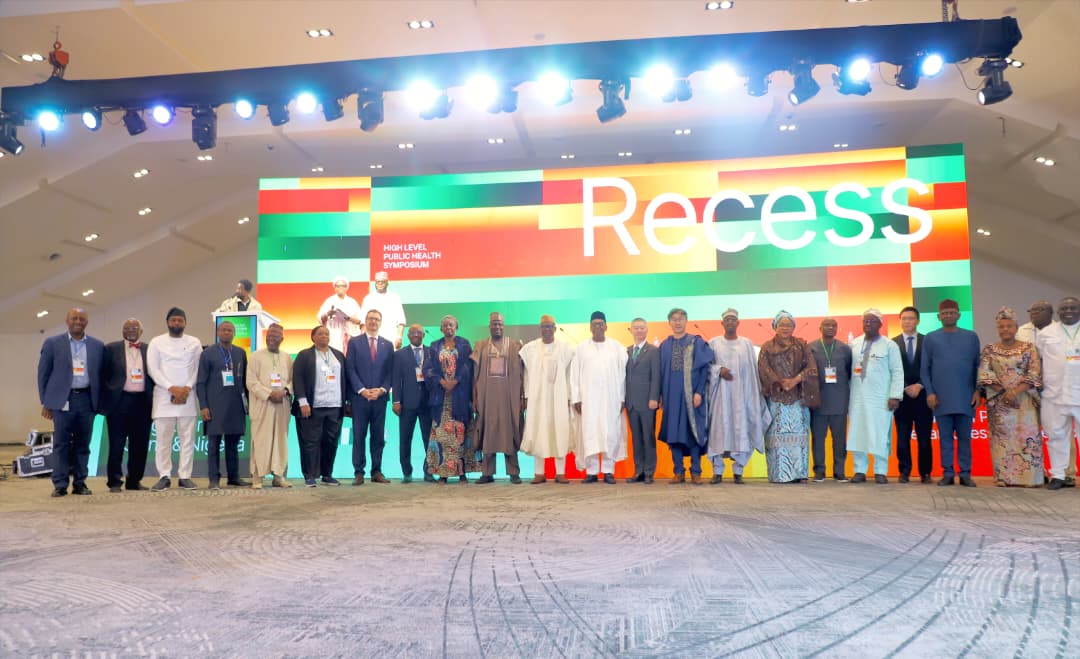
They made the call in Abuja during the EHF Technical Workshop, organized by Lafiya UK and the Nigeria Partnership for a Healthier Future programme.
They said doing so would serve as an alternative to existing health financing models.
The stakeholders also noted that the adoption of ethical health financing initiatives in some northern states has improved the health and livelihoods of vulnerable groups.
Dr Usman Gwarzo, national team lead of the UK Foreign, Commonwealth and Development Office (FCDO)-supported Lafiya Programme, said the EHF programme was conceived immediately after the COVID-19 pandemic to address bottlenecks to achieving Universal Health Coverage (UHC).
He said the stakeholders also considered leveraging alternative financing options to improve the health system.
He also said the experts identified a common religion in the five Lafiya-focused states, and decided to leverage Islamic philanthropy, including zakah and waqf, to finance the health care system.
Waqf, Islamic philanthropy, is a charitable endowment in which a person permanently dedicates assets to Allah, prohibiting them from being sold, gifted, or inherited. Zakah is a mandatory 2.5% wealth tax on eligible Muslims to purify their assets and support the poor and needy.
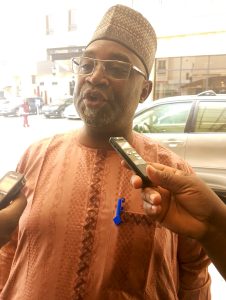
Gwarzo said, “We utilized traditional institutions, mainly emirates, which people in the community usually trust, and engaged some religious leaders to enlighten the public on how these resources can be converted to address health.
“We also used the lessons from them to advocate to other communities in the five states. We have established 138 community-based EHFs across all LGAs in the five focus states, with some still in their early stages and others at an advanced stage. One of the things we are working on with them is conducting a community needs assessment to identify their primary health issues. Some will tell you it’s human resources, some infrastructure, etc.”
He added that based on their needs, they developed plans.
Dr. Warshu Tijjani Rabiu of the International Institute of Islamic Banking and Finance at Bayero University, Kano, explained that the concept of ethical health financing was designed to address the funding shortfall in Nigeria’s health care system.
He said, ” If you look around, you will see that many families are battling and swimming in poverty. And when it comes to health care financing, they don’t have enough to go by. You see them begging, going around with hospital bills, looking for people to come to their aid. Funds are coming as aid, and we cannot rely on them indefinitely. ”
He said that, with the launch of the Lafiya program, stakeholders considered developing a financing initiative aligned with local beliefs.
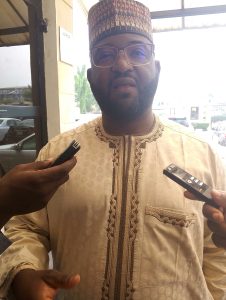
Rabiu further said this is to encourage them to draw on internal resources and allocate them to serve people in need in their local communities.
“In Islam, there is something called zakah. It is an annual levy that you must pay when you reach a certain wealth threshold. There is also a waqf, which is an endowment. People donate assets to Allah (subhanahu wa ta’ala) to earn a reward. We designed the program requiring each local government in the five states where we are working to form an organization focused on zakah and waqf. They collect, look into the needs within the local government, and channel the resources.”
He added that the main objective is to support the health of vulnerable women and children.
He also highlighted that a pilot test was conducted and that they were amazed by the outcome, adding that over the past two years, they have established zakah and waqf committees in five states.
He said, ” We have over 138 organizations so far. Half of them are fully registered with CAC. They have their account number, a board of directors, and management. They began working with their local governments to secure resources and channel them to people in need in that area. For example, in Ungogo, Kano State, residents were enrolled in a health insurance scheme. Registered people shouldn’t experience stress from health care issues.
“During that process, we received another opportunity: the scheme stated that for every 100 we brought, they would provide 100 slots at no cost. So that enabled us to register many. In some local governments in Jigawa, we secured farmland for rice cultivation, generating significant revenue.
“The Kano waqf is doing a great deal. Dutse alone generated over N2 billion in zakah last year, either in kind or in cash. So, if Jigawa can generate this amount of money, what can Kano do? Even if you say trillions, they can generate it because wealthy people are all around there.”
Dr. Rabiu described the ethical health financing model as a game-changer.
“If you look into many schemes that the government brought to assist people, many of them felt miserable because they are not touching the needy people. People are unwilling to contribute because they don’t know where the funds are going. They are crying out now in terms of this tax.
“But when you say this is zakah, this is endowment, people feel free to donate because they know that they will get a reward from Allah. For a Muslim, giving zakah when eligible is mandatory. You have to give it no matter what.
“Therefore, we bring something new to the people, something that is embedded in their religion. Therefore, they are very comfortable coming and participating. And they start seeing the result. Therefore, they are more inclined to support the system. So in the future, inshallah, this arrangement will be a game changer.”
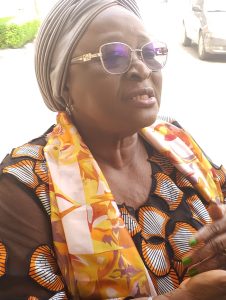
The Executive Director of the International Society of Media in Public Health (ISMPH), Chief Moji Makanjuola, hailed the Lafiya programme, saying that the government alone could not continue to provide health care delivery service.
She said, “So for me, what the Lafiya program has been able to do is ignite the Nigerian in us; being your brother’s keeper, and cutting across, not just health, education, shelter, but humanity as a whole. The whole essence of survival is what we have learned here, what Nigerians are doing and doing quietly. We know that some forces need to be put in place. If you are talking about how we are a religious country, what does your religion say about looking after humanity? I think we have seen it here.”
She added that ethical health financing initiatives could stimulate growth, development, and the resilience for which Nigerians are known, thereby reducing the country’s dependence on donors.
“Take the example of the man who donated 13 houses. The rent paid on those houses would be reinvested to provide some measure of comfort or financing when needed. This translates to the fact that out-of-pocket spending can also be mitigated with the kind of things that the people around here are doing, and I think that is a plus; it’s a win-win situation for everyone. So using your religion, your space, your resources, to ensure that there’s a pool where people can get some quality healthcare delivery service going forward.”
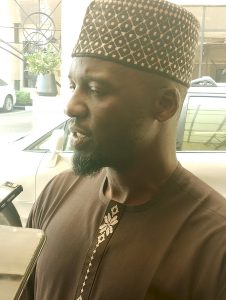
Dr. Muhammad Nura Abdullahi, Director of Khairat Islamic Trust, Kano, said his organization, established about 12 years ago, has achieved milestones, including sponsoring the education of orphans and establishing an orphanage.
He said the challenges include limited awareness of the Islamic-based initiative and most donors’ unwillingness to collaborate with local organizations, among others.
Adam Imam, lafiya-programme EHF consultant said the key achievements of the EHF initiative include: mobilisation of over N600 million in cash and kind for community health services, enrollment of over 4, 000 poor and vulnerable persons into states’ contributory health schemes, sponsorship of 55 students into health institutions, establishment of state networks of EHF institutions and enrollment of over 4, 000 poor and vulnerable into states contributory health schemes, among others.
He said lessons learned from the programme include: communities are willing and able to mobilise local resources to support improvements in community health and social services; resource mobilisation and management are the cornerstone of the initiative; and linkages with government programmes, development partners, and institutions are necessary for sustainability, among others.