By Ojoma Akor
Ministries of Health, research institutions, and partners across Africa working on HIV, TB, and malaria have called for a unified Pan-African health and clinical trials data-sharing platform to boost research collaboration and strengthen health systems on the continent.
They made the call during a high-level convening workshop on Pan-African health and clinical trials data sharing in Abuja. It was organized by MRC Gambia at the London School of Hygiene & Tropical Medicine (LSHTM), and by the West African Networks of Excellence for Tuberculosis, AIDS, and Malaria (WANETAM), and hosted by the Africa Centers for Disease Control and Prevention (Africa CDC).
Prof. Assan Jaye, Prof. of Global Health Education and Research Leadership at the Medical Research Council (MRC), said the objectives of the meeting are to engage all African partners involved in health research about the vision to make the West African data repository a pan-African platform.
He said the consortium of partners had earlier built a data platform called the Health Data Research Platform West Africa, with funding from the European Developing Clinical Trial Partnership (EDCTP).
He said, “The data platform is an invaluable resource for harnessing research data if we make it a repository. The development of the research data platform was spurred by the enormous amount of high-quality work they did in West Africa on TB resistance, including multidrug resistance.
“We realized that we had a high prevalence of multiple drug-resistant TB in Nigeria, and also in other African countries like Senegal and Burkina Faso. So this report required us to build the data so we could actually harness it for further research. That was the reason why we set up the data platform called the Health Data Research Platform West Africa.”
He also said that a sizable amount of data is emerging on drug resistance, including malaria drug resistance, adding that all of this data needs to be put into a repository so that other scientists can benefit from it.
Prof. Jaye said the data they have been harnessing over the past years requires them to build a data platform, creating a repository of research data that can help improve outcomes for the community.
He highlighted that data is now key to everything. He said,” We have to own our data and control our data. We can collaborate with other stakeholders outside Africa, but we need to control our data. We must understand our data. And if we understand our data, we will know which tools to use to exploit it to benefit communities and our people generally, as it impacts health.”
While noting that African governments are reluctant to allocate resources for research, he added that this long-standing practice leaves research institutions dependent on external funding.
He said those external funders are also getting tired and that it is important for Africans to start considering allocating resources for research and sustaining the capacity to do research.
The Regional Director of the Africa CDC, West Africa Regional Coordinating Center (RCC). Dr. Alinon Kokou said that high-quality data is essential for decision-making, but that its true value is realized only when it is shared responsibly and used effectively.
He said data sharing is a governance issue that requires trust, transparency, and accountability.
While commending Ghana, Nigeria, and Liberia for taking important steps by signing Data Sharing Agreements, he enjoined other member states to do the same.
He added that Africa CDC remains committed to supporting member states in strengthening data governance systems at national and sub-national levels, while building the capacity needed to sustain these efforts.
Professor Dorothy Yeboah-Manu, Director, University of Ghana, Noguch Memorial Institute for Medical Research, said there is a need to raise awareness among ministries of health in African countries about the importance of data sharing.
She said, ” During COVID-19, we saw that we had to generate vaccines, diagnostics, and other tools that were needed in the control of the pandemic. This we were able to do because the data was shared worldwide. And in West Africa, during the Ebola crisis, of course, they needed the data from the viruses that caused Ebola before they were able to design diagnostics and so forth. “
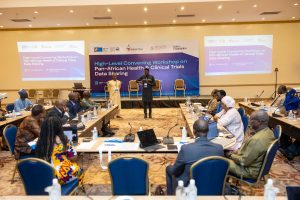
She highlighted the need to educate the ministries about the importance of data sharing.
“Diseases in Nigeria can enter Ghana within a few minutes. So if we understand that we share problems in terms of health burden, and that we can only solve them if we have the data needed to inform policy and the tools we need to develop, then we can address them.
” If this understanding is created, then we will see the importance of sharing the data, because we need the data for us to strategize. If we don’t have the data, we will not be able to strategize to combat the diseases that are affecting us all,” she added.
Michelle Nderu, European and Developing Clinical Trials Partnership (EDCTP) Officer, said that a lot of data has been generated in Africa for research and clinical trials, but that it is somewhat fragmented.
He said, “This meeting is quite pivotal in terms of looking at how we can come together, collaborate to ensure that all the data is consolidated and is kept in a trustworthy space; and also when it comes to sharing data. That also increases collaboration and trust across different institutions, and in sharing data, you’re also increasing the capacity in the institutions, because this data is very important when it comes to shaping health policy in Africa.”
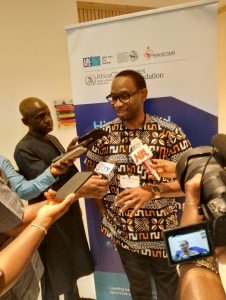
Prof. Toyin Togun, a professor of Global Health at the London School of Hygiene and Tropical Medicine, said Nigeria is the largest country in Africa, and has one of the largest burdens of diseases of public health importance.
Togun, who is also a senior scientist in the collaboration group pushing for health data research and sharing across West Africa, said that, at the same time, Nigeria is at the forefront of confronting these challenges and providing leadership in the West African region.
He noted that Nigeria is crucial to any intervention we want to conduct across the West African sub-region.
He said, “In terms of population, diversity, Nigeria is really strategic to provide intervention. So, we must ensure that Nigeria is fully integrated into any pan-African initiative.”
He added that there is a commitment from multiple researchers and institutions in Nigeria, West Africa, and beyond to come together and boost African research productivity by merging and linking diverse datasets.
He said, “That creates opportunities for us to have a very broad and diverse understanding of the epidemiology and dynamics across the region. We say one in every black person is probably from Nigeria. So, we can’t do anything without considering Nigeria. ”
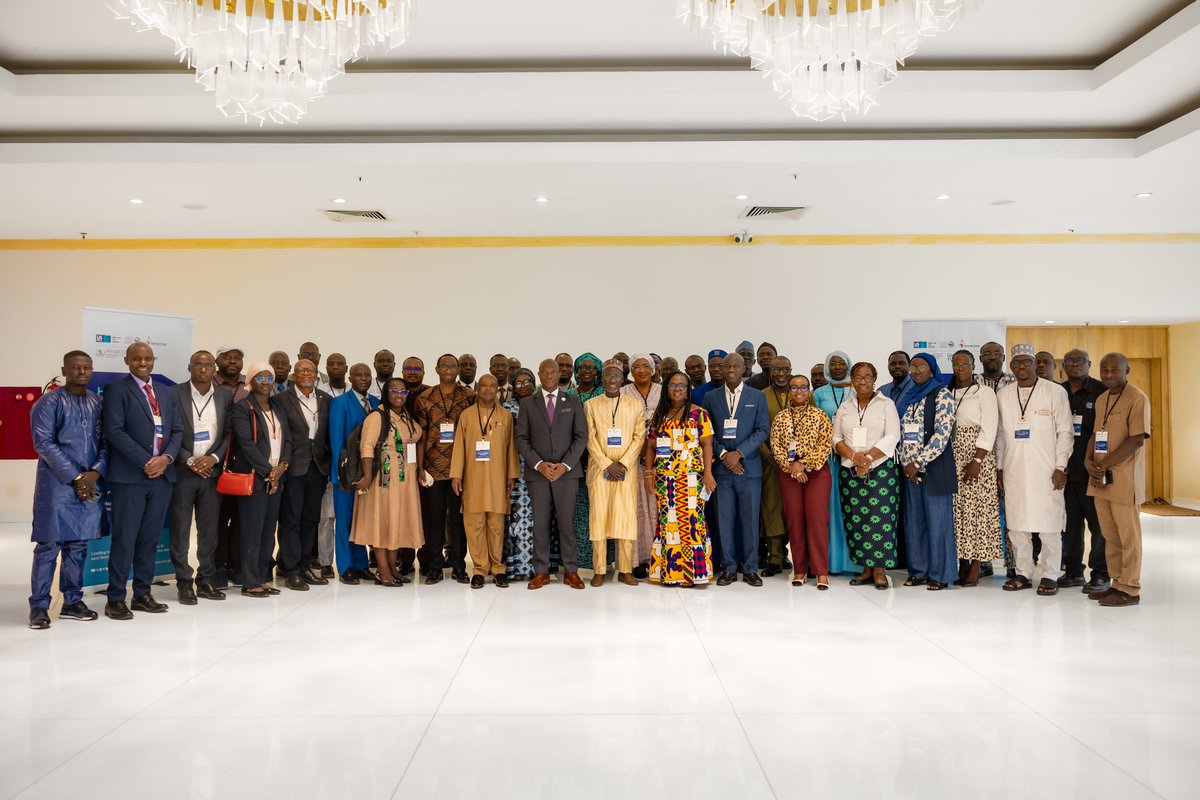
Prof. Togu added that researchers and research institutions from more than 12 West African countries were represented at the meeting, and that the meeting aimed to develop an Abuja Declaration to serve as a roadmap for data excellence in Africa.