By Ojoma Akor
The governments of Nigeria and China have said that strong investments in preparedness are crucial to preventing and tackling pandemics.
They stated this Monday during a high-level public health symposium on pandemic preparedness and response, with insights from China and Nigeria in Abuja, Nigeria.
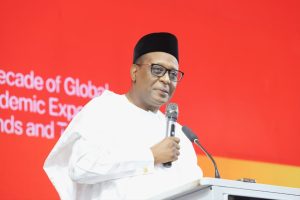
Nigeria’s Coordinating Minister of Health and Social Welfare, Prof Muhammad Ali Pate, said that preparedness must be continuous and proactive.
He said there is a need to invest in preparedness, adding that ” investment includes investing in a resilient health system, whether it’s the primary health care system, human resources that are affordable, platforms to provide diagnostics, and produce some of the local commodities.”
While saying that pandemics do not start overnight, he added that they begin with an outbreak and grow until they cover the entire world.
He said, ” The impact of these pandemics, when they occur, ultimately disrupts the course of human civilization, and we’re still experiencing some of those impacts from COVID-19, even if the pandemic itself has stopped.
“That is because of the interconnected nature of our world, which has become far more interconnected than 100 years ago, with globalization, with the inter-dependency across our sectors, with the changing ecology, with climate change, with technological developments that have enhanced our ability to diagnose, but also to respond, but in some areas also could expose vulnerabilities. It is, but the important point is that pandemics are not only a public health issue, but they are also matters of economic security as well.”
Prof Pate highlighted that a 5.5% contraction in global Gross Domestic Product (GDP) was recorded during COVID-19, and that almost $15 trillion of global GDP was wiped off due to demand- and supply-side interruptions caused by the pandemic.
He said, “But as we look into the future, there are very important lessons that we must always remember. And it’s not only during an outbreak that we should scramble to produce them. We have to think ahead and invest to make those available, because if you start investing when there’s an outbreak, it’s too late. Secondly, strong public health institutions are vital.”
The minister said that frontline health workers must be protected and empowered, noting that they are the lifeblood of pandemic response efforts.
He called on states to ensure their health workers are properly kitted and equipped to respond when crises emerge.
He further said that’s why the federal government pushed to retrain almost 79,000 frontline health workers in the last two and a half years, because the health workers are the most vital element.
Minister of State for Health and Social Welfare, Dr. Iziaq Adekunle Salako, said pandemics are one of the most disruptive and brutal killers in human history, which the world must always be prepared for in a well-coordinated and equitable manner, if the most recent experience from COVID-19 is not to be repeated.
He said, ” Against this background, the dire straits that public health funding is now facing and the growing consensus that the next pandemic is not if but when, this symposium on ‘Lessons on Pandemic Preparedness and Response: Insights from China and Nigeria’ is very timely. It is therefore with a deep sense of responsibility that I join and welcome all to this important symposium designed to leverage global partnership to ensure swifter and more coordinated responses to future public health emergencies.”
Dr. Salako said the COVID-19 pandemic between 2020 and 2023 did not merely test health systems but also reminded “all that infectious diseases know no borders, shattering assumptions and revealing that even the wealthiest nations could be brought to their knees by a pandemic.”
He said Nigeria, like many other countries around the world, faced significant challenges during the COVID-19 pandemic, with many lives lost, infrastructure pressures, and economic distress that the country has not yet fully recovered from.

He stated that, similarly, China, the country that experienced the first cluster of COVID-19 cases in the world, was acknowledged by the World Health Organization (WHO) to have taken strong and effective measures, characterized by rapid response mechanisms, disciplined implementation, technological integration, and community mobilization.
“Our two countries therefore have a lot to learn from each other and to teach the world to prevent and manage future pandemic outbreaks,” he said.
The minister added that in the last 10 years, Nigeria has experienced outbreaks of multiple infectious diseases, including Ebola, Monkeypox, Lassa Fever, measles, and cholera, with the COVID-19 pandemic of 2020 being the most significant.
He also said that these outbreaks underscore the importance of implementing continuous, robust infectious disease prevention and surveillance systems for early detection and response.
He said that under the administration of President Bola Ahmed Tinubu, health security is enjoying priority focus as the 4th pillar of the Health Sector Renewal Investment Initiative, adding that “state level epidemic preparedness and response capacity is being strengthened with the integration of the 7-1-7 target through the SITAware Transition Project and the interplay between environmental, animal and human health is being given priority attention through the one health mechanism.”
Yu Dunhai, the Ambassador of China to Nigeria, said the threat of infectious disease remains complex and severe, with persistent uncertainties surrounding emerging and re-emerging outbreaks.
He said that against this backdrop, strengthening practical cooperation in public health between China and Nigeria not only meets the shared aspirations of their people for better health and well-being but also carries both immediate and long-term significance.
He highlighted that in September 2024, President Tinubu visited China and, together with President Xi Jinping, elevated China-Nigeria relations to a comprehensive strategic partnership, laying a solid foundation for higher-level cooperation in areas such as health and scientific innovation.
He said, “Nigeria plays a vital role in the regional public health system. China attaches great importance to cooperation with Nigeria in the public health sector and stands ready to work with Nigeria to explore health development pathways suited to the realities of developing countries. China remains committed to South-South cooperation, guided by the principles of equality, mutual benefit, and win-win outcomes.
“We will continue to promote public health cooperation with developing countries, including Nigeria, and further strengthen collaboration with Nigeria and multilateral partners such as the WHO. The Chinese Academy of Sciences, as a key force in China’s scientific and technological advancement, is committed to serving national strategy and the well-being of humanity, and has always prioritized international scientific cooperation. We are confident that your joint efforts will yield fruitful outcomes. ”