By Ojoma Akor
Stakeholders in public health and artificial intelligence (AI) specialists have said that harnessing AI in public health will help ensure quality health care service delivery in Nigeria and across the continent.
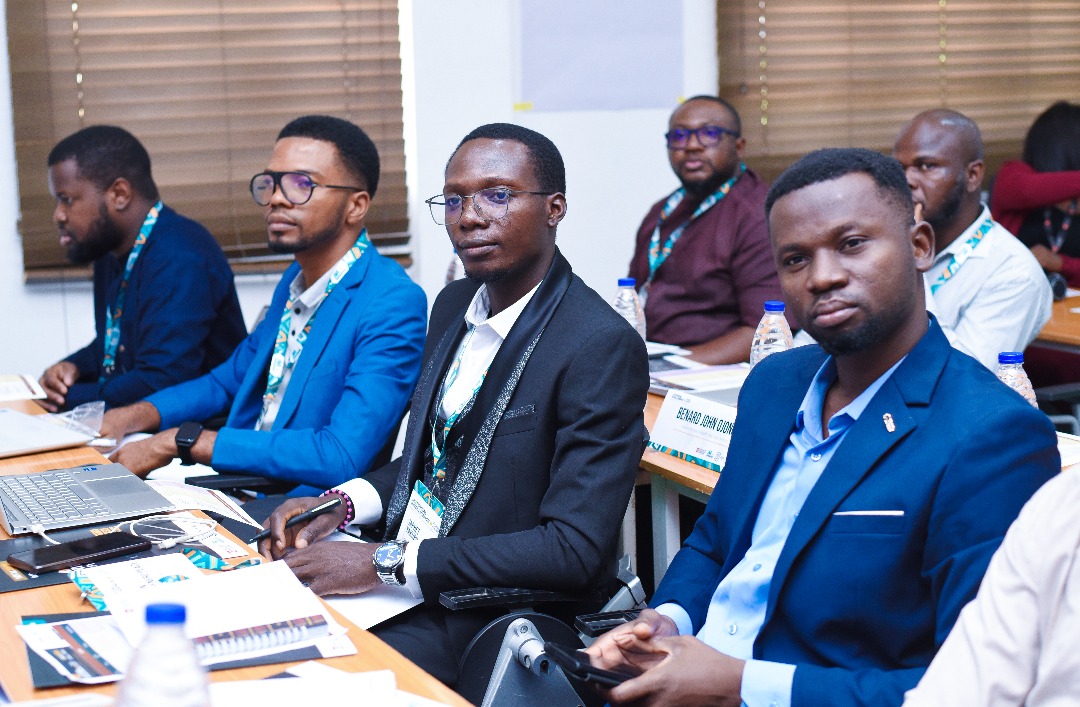
They stated this during the capacity-building workshop organized by Artificial Intelligence 4 Social Impact & Development (AI4SID), an initiative of the Africa Hub for Innovation and Development in partnership with the West African Institute of Public Health, the Artificial Intelligence Mathematics Modelling Lab, the University of Toronto, and other partners.
Dr. Leke Ojewale, Senior Technical Advisor to the Minister of Health and Social Welfare on Digital Health, said the country has not done enough in terms of leveraging AI for public health, adding that, however, the Ministry of Innovation is doing a fantastic job trying to provide the needed infrastructure for AI deployment in public health.
He said the Federal Ministry of Health was building relevant infrastructure called the Nigerian Digital and Health Architecture (NDHA) that every AI tool, as far as health is concerned, can then plug into.
He said, “The ministry was also leveraging on three foundational building blocks: client registry, the health facility registry, and healthcare worker registry to build an initiative called the health information exchange.
“The health information exchange is then what the shared health record is going to leverage on. And then you can have diverse and enormous AI tools,” he said.
He added that there is a document called the Nigeria Digital Health Architecture, a framework that outlines the regulation of digital health.
“Not just AI on its own, but then it talks about digital in health. Then, of course, AI can then leverage what we are doing, ” he added.
Dr. Francis Ohanyido, Director General of the West African Institute of Public Health, said everyone, regardless of the sector they work in, needs to be up to date with artificial intelligence in one form or another.
“And being able to use it as a tool to improve your output in whatever sector you find yourself in,” he said.
He highlighted that AI is not going to take people’s jobs; instead, people who don’t upgrade to understand how to use AI effectively in their work will lose their jobs.
He said that Nigeria, as a country, also needs to become more intentional about how to engage with AI and harness it across sectors.
“Because AI is just a tool, and we must never forget that it’s not going to replace our brains. The human brain is very advanced. There’s no AI currently that is as advanced as the human brain. So those are part of the conversations that we are having here today.”
While saying that it is essential to bring health technology to a level where it solves problems in the health sector, he also said it must drive an agenda for development that improves the lives of women and children, even in remote places.
He said that the AI industry in Africa is estimated to be between $13 and $18 billion by 2030.
“So if we do it very well and Nigeria leads the course, if we improve our economy, a lot of people who are doing Japa will come back. AI is an advantage, like we say, it’s a tool. And in the hands of a very good professional, it even enhances the outcomes better. And because it’s here to stay, we cannot just say we will not use AI in the health system.
“We have to use it. But if the industry and AI drive significant turnover in our economy, they can also help it experience a boom. At one point, India was where we are. But by the time India’s health industry began yielding good economic results from health tourism, a lot of Indians who were living abroad went back to India,” he added.

Dr. Gbenga Ijaodola, deputy director at the Department of Research and Statistics, Federal Ministry of Health and Social Welfare, and also the program manager for Nigeria Hepatitis Initiative, said, “AI is that particular tool that will make us work faster, think faster, and be able to come up with policy decisions faster if we can use it in the right way.”
He said the government’s responsibility is policy development, policy application, and ensuring that what is done is in line with established rules and regulations.
He said there was a need to ensure an ethical framework to prevent AI abuse.
He said, “We need to build a framework for ethics. Artificial Intelligence, if we are not careful, is like a two-edged sword. It might have both positive and negative impacts on us. So we really need to work on that ethical framework so that we are guided as much as possible by what we want artificial intelligence to do and what we want to get from it.”
Ijaodola explained that the ministry was developing frameworks, and that the particular framework regarding ethics and the applicability of artificial intelligence in Nigeria will soon be ready.

Dr. Bunmi Ajala, the National Director of the Center for Artificial Intelligence and Robotics, emphasized the importance of deploying AI in public health.
He said AI is important for diagnostics, personalized treatment, and drug discovery.
He said, “Even the management, optimization of resources, logistics, how to move, even to take a sample of vaccines from one location to another. How do you optimize even the utilization of remote personnel across infrastructures? AI is here now for disease surveillance, early detection, and response time. AI is now coming into place and simplifying some processes. It is becoming a valuable tool for even specialists.”
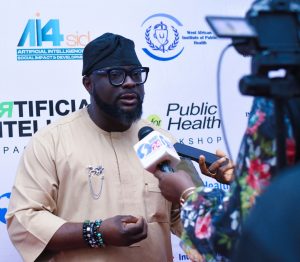
Dr Kunle Kakanfo. The founder of Artificial Intelligence for Social Impact and Development, and a certified artificial intelligence management professional, said the capacity-building workshop aligns with the organization’s goals and has four pillars that focus on how AI is catalyzed, not just for commercial purposes but for social good.
He said, “We must differentiate the AI that will reach the commoner in rural areas, that will improve the livelihoods of people, that will be able to improve the health outcomes of people, improve educational outcomes for children in school, including children that are out of school. So what we’re doing here today is that we are on a journey as part of the pillars of our work. One of the pillars is that we’re catalyzing AI solutions for the nation.
“Our key focus is health, education, and gender. One of the areas is health, which is what \ gets to the people who need it. How can we use AI to reduce the burden of care on the health system?
“The health system is already fragile. How can we use AI to implement a tax-shifting policy by giving community health extension workers tools that free doctors’ time? For example, there are some of those tools we have.
“We have an AI tool that can help you screen for TB. You don’t need a doctor to listen to the cough. The AI tool listens to the cough. Anybody can hold it and then report to the doctor. The doctor validates it.”
“And instead of going on and on without care, more people can be cared for because of these tools.
“ AI can help us leapfrog in health, in education, and in climate. So, one of the things we’re doing here today is to ensure we’re focusing on health as a subsector. We’re bringing together all the key public health organizations, as you must have seen in the room.”
He said over 40 public health organizations, including representatives from different ministries, departments, and agencies that work in health..
He further said the organisation is focused on those groups because they already have programs reaching the community.
He said, ” One of the things we want to do is to ensure that AI reaches the community in a responsible, ethical way, in the fastest way possible, rather than the AI that we put on the market, which you have to pay a subscription for.
“AI that will reach the lives of people, whether they can afford it or not. And that’s why we’re working through existing programs. We’re training representatives from these organizations so that they can know how to maximize AI .”
The AI expert said the organization also set up an AI hub in Abuja, where people can come together to co-create and develop AI solutions to improve people’s health outcomes.
He said the capacity-building programme was also geared towards fostering partnerships.
Kakanfo added that a significant outcome of the event is an AI framework in health that can help ensure that everyone implementing AI, or their programs, is ethically guided and responsibly implemented.
He stated that 40 to 50 participants were targeted for the workshop, which included over 60 persons from across 40-plus public health and development organizations, including AI specialists from government health ministries and departments, such as the National Primary Health Care Development Agency (NPHCDA) and the Nigeria Centre for Disease Control (NCDC), as well as the Federal Ministry of Health.