By Ojoma Akor
The Federal Ministry of Health is working assiduously to ensure that oral health is fully integrated into Primary Health Care, the Minister of State for Health and Social Welfare, Dr Iziaq Adekunle Salako, has said.
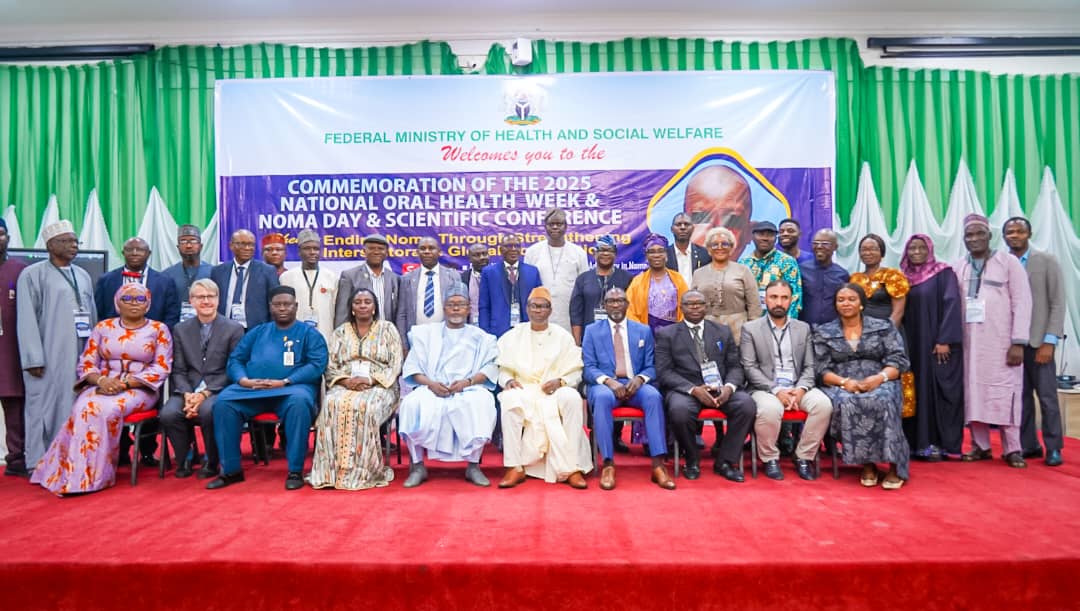
He stated this during the commemoration of the National Oral Health and Noma Day. It was organized by the ministry in collaboration with Médecins Sans Frontières (MSF) and themed ‘Ending Noma through strengthening intersectional and global partnership.’
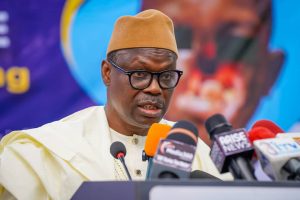
He said that primary health centres would provide a full complement of primary care, including oral hygiene education, counselling, essential diagnostics, fluoride treatment, restorative services, and referrals when necessary.
He said, “The reorganization and expansion of the Basic Health Care Provision Fund (BHCPF) is ensuring that more funds will be made available to access oral health services, especially for the vulnerable population.
“Dental facilities would be upgraded and equipped to enhance oral health care quality. More dental professionals will be employed to provide services at these primary health care centres (PHCs). The ministry has also embarked on training of primary health workers, community health workers, and traditional birth attendants on early identification, treatment, and referral of common oral diseases.”
The minister said this approach is helping to reduce stigmatization, raising awareness of oral health, and ensuring early identification of Noma and cleft lips or palates for appropriate referral to comprehensive treatment, often provided free of charge.
He highlighted that oral health is fundamental to overall health. Quoting the World Health Organization (WHO), he said, “No health without oral health”, adding that it underscores the interconnectedness of oral and overall health.
While saying that oral health has far-reaching consequences, affecting how people eat, speak, learn, and interact, he said poor oral health is not merely a cosmetic issue but a silent epidemic that undermines productivity, self-esteem, and quality of life.
He said that, yet, millions of Nigerians, especially children and the elderly, continue to suffer from preventable oral diseases such as dental caries, periodontal disease, and oral cancers.
He explained that Noma is a rapidly progressing gangrenous infection that affects the face, primarily in malnourished children with poor oral hygiene, living in extreme poverty.
He said it begins as a simple gum infection and leads to severe disfigurement or death within days if untreated.
He noted that Nigeria lies within the Noma belt in Sub-Saharan Africa, among countries with the highest disease prevalence, especially in the North-Western region.
“Factors such as poverty, malnutrition, and poor oral hygiene continue to drive the incidence, while a poor surveillance system means many cases go undiagnosed and untreated, thus leading to avoidable deaths. This, therefore, is a disease entity that we need to confront with urgency frontally,” he said.
He said the government of President Bola Ahmed Tinubu is committed to improving oral health through an integrated primary healthcare approach, focusing on risk reduction, early detection, diagnosis, and management of oral diseases at the grassroots level.
He said, “The establishment of the Noma Centre, Abuja, and Noma Children Hospital in Sokoto State, where Noma patients are treated free, including rehabilitation of these patients into the society, demonstrates the commitment of the federal government to address the issue.”
He added that Nigeria is ready to continue collaborating with international partners and NGOs to strengthen surveillance, improve early diagnosis, and provide life-saving interventions.
The country director of MSF, Ahmed Aldikhari applauded the long-standing collaboration with the Federal Ministry of Health and the Ministry of Health in Sokoto State at the Noma Children’s Hospital.
He said that since 2014, they have worked hand in hand to deliver comprehensive care—from inpatient treatment for acute Noma and major facial reconstructive surgeries to oral physiotherapy, health promotion, community engagement, nutrition support, and mental health and psycho-social services.
He said that over the past decade, these joint efforts have enabled more than 1,600 major reconstructive surgeries for 1,074 patients through 33 surgical missions.
He said, “In 2025 alone, 99 surgeries were performed for 89 patients. Equally important, capacity building remains central to our mission.”
He said a significant milestone in the collective work was the inclusion of Noma in the WHO list of Neglected Tropical Diseases—”a result of strong global advocacy led jointly by the Nigerian government and MSF. Nigeria is now well-positioned to transform this recognition into real progress through strengthened prevention, improved surveillance, and expanded access to treatment.”
He added that through MSF’s outreach, they identified and referred 666 early-stage Noma patients, saying it is clear evidence that awareness and timely action make a profound difference.
He emphasized that sustained and deliberate investment is essential “if we are to prevent Noma, care for those affected, and build strong health systems capable of addressing this disease.”
He urged government bodies, donors, and partners to continue prioritizing the vital work.
Ahmad Bilal, head of mission at MSF, said the organization has trained 28 Nigerian surgeons and 14 anesthetists in Noma care.
He said, “Besides providing surgeries, our goal was to provide capacity building to Nigerian local surgeons and anesthetists. Nigeria now has the capacity to lead this intervention independently. Currently, we bring one or two people; the entire intervention is led by the Nigerian team, who are mainly in Sokoto, and they come from other areas as well. ”
He said that integrating Noma into primary health care will help in early disease detection, adding that frontline health workers should be trained to recognize the disease and increase community awareness.
Charles Ononiwu, country director of Noma Aid Nigeria Initiative (NANI), said his organization provides free surgeries and supports Noma research. He said Noma is a preventable disease and that eradication of poverty will help tackle it.
Chairman of NANI, Mathis Winkler, said the federal ministry of health is a champion in Noma and that it makes it easy for NANI to partner with it on fighting the disease. He said Nani was his mother’s brainchild, and he would continue the legacy.