


By Ojoma Akor, Grateful Ogunjebe (Nigeria) & John Musenze (Uganda)
Every year, cancer claims no fewer than 600,000 lives across Africa. Data from the World Health Organization (WHO) showed that 1,185,216 new cases and 763,843 were recorded in 2022.
By 2040, cancer cases are projected to rise by more than 60% worldwide, with the sharpest increases in low- and middle-income countries, including sub-Saharan Africa. The cancer burden in Sub-Saharan Africa is forecasted to rise to 2.1 million new cases and 1.4 million deaths by 2040.
Nigeria records about 79,542 cancer deaths annually, according to the International Agency for the Research on Cancer (IARC). The agency said 127,763 new cases of cancer were also recorded in the country in 2022.
In Eastern Africa alone, approximately 349,500 new cases and 236,900 deaths were reported in 2022. Kenya records approximately 47,887 new cancer cases and 32,987 deaths annually, Tanzania sees around 42,060 new cases and 28,610 deaths, and Uganda has nearly 35,968 new cases and 24,629 deaths each year.
Across the region, cervical cancer remains the leading cause of cancer deaths among women, followed by breast, prostate, and Kaposi sarcoma. Women bear a disproportionate share of the burden. In Kenya and Tanzania, females account for nearly 60% of new cancer cases, largely due to the deadly combination of cervical and breast cancers. HPV vaccination and regular screening could prevent many of these deaths, yet access remains limited, and awareness is low.
Also, GLOBOCAN 2022 data show that in Southern Africa, there were 120,226 new cases and 69,874 deaths.
Experts say cancer is the abnormal growth of cells that has gone beyond the body’s control. Cells usually grow normally and die off naturally. Still, cancer cells, on the other hand, grow abnormally and continue to grow out of hand or beyond the proportion of the local tissue. When this occurs, the cells affect surrounding tissues and can spread to other parts of the body.
According to Prof. Abidemi Omonisi, President of the Nigerian Cancer Society (NCS), cancer burden is increasing in Nigeria, Africa, and other developing countries. He said there are more people under the age of 50 coming down with cancer compared to the past.
He added that cancers that were not very common in the past in Nigeria, such as blood cancers, are now becoming more common.
Cancer Survivors, Patients Experiences
There are myriad barriers to quality prevention, screening, and treatment services for cancer across the continent.
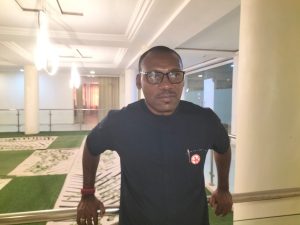
Dozie Akwarandu, a stage-three colorectal cancer survivor and patient advocate in Nigeria, points out that the challenge doesn’t end with treatment. “Surviving cancer in Nigeria is really challenging,” he said. “The system was not there and has not been there to help or assist in any way.”
Akwarandu’s journey exposes a rarely discussed reality: life after treatment. While attention often focuses on diagnosis and survival, little is said about what happens once chemotherapy or surgery ends. Follow-up tests, ongoing medications, emotional strain, financial pressures, and social stigma remain — and survivors are largely left to navigate them alone.
Dozie recalls the moment he felt like giving up. “Yes. I got tired. My body became weak. The side effects of the drugs affected me greatly. I decided in my mind that I would not continue treatment. I did not tell anyone. I stopped following the treatment protocols and changed my lifestyle. Then one Sunday, after a lot of persuasion and revelation, I reflected. I looked at my daughter and decided I wanted to see her grow up. I reluctantly continued treatment. When I went to the hospital, my body system had dropped, and I was not eligible for chemotherapy. With adjustments, I continued treatment. By God’s grace, I finished, and I am here today.”
Gloria Orji, a 15-year breast cancer survivor, brings a perspective shaped by decades of navigating treatment and advocacy.
Orji, who is also the president of the Network of People Impacted by Cancer in Nigeria (NEPICIN), said, “The first challenge is lack of awareness. A lot of people don’t know about cancer, what it is, and what it does. Cancer NGOs are creating awareness, but unfortunately, people still hold on to wrong beliefs.
“I once attended a programme where a community-based NGO was telling people that cancer is like an infection. I had to correct her because that was a wrong expression. Culture and religious beliefs also play a big role. Some people believe cancer is a curse or that God alone will heal them, so they don’t go to the hospital. Social media spreads false information. People think cancer is easy to cure with pineapple water or that pharmaceutical companies only want money. Treatment itself is expensive, and sometimes even investigations alone cost so much that people are left helpless.”
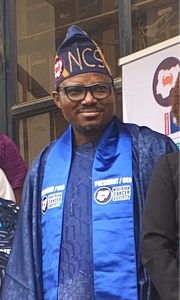
Challenges across Nigeria, Africa – NCS
President of the Nigerian Cancer Society (NCS), Prof. Abidemi Omonisi, said that while the federal government has done very well over the last 10 years in improving cancer care, some challenges remain.
He said the major challenge in Nigeria is the disconnect between the federal government and the states, noting that about 30 states lack cancer control plans.
“So if there is no cancer control plan in the state, nothing is happening there. We have serious problems at the sub-national level. The federal government is taking significant actions, and the states need to align with it. Some states have established cancer centers. Some plan to develop one. But the truth is that in many states in the country, there is no serious intervention.”
He said other challenges include poor funding of cancer registration, adding that this affects the quality of cancer data in the country.
“Then again, there is a strike going on in the public hospitals in the country. We have lost some of our cancer survivors because of the strike; they couldn’t access care. There are some private cancer centers in the country. But they are very expensive, and many of the cancer survivors cannot afford their services. I cannot blame private oncology hospitals for their prices, because many of them actually took loans to build their hospitals, as the government doesn’t support them at any level. They also have to pay back their loans, pay salaries, and other running costs.”
He added that some African countries do not have a cancer control plan or a single radiotherapy machine.
He further said that African governments and the African Union need to make cancer a major priority of intervention.
“They must fund cancer. Cancer is underfunded in many African countries due to a lack of political will. Other African countries must also address it. Political will is very important. They must see cancer as a public health disease, and do everything possible to intervene in their various countries,” he added.

‘Poor Quality Control Fueling Adulterated Cancer Medications’
Runcie C.W. Chidebe, a cancer advocate and Executive Director of Project PINK BLUE, noted that quality control is a major challenge for cancer care in Nigeria and across the continent.
He said,” One of the biggest problems we are having right now in the clinics in Nigeria is quality control. There are so many fake or substandard oncology medications that are coming into the country that I think there is an urgent need for the government to work with the Oncology Pharmacy Practitioners Association and the Pharmacy Council of Nigeria (PCN) to ensure that they check these medications; these substandard medications are always very cheap, and our patients really take them. Still, it doesn’t do much, so we need to control that; it’s a big issue right now.
“And you know that cancer care is expensive, and people really struggle so much to get this money, and they don’t get the outcome that they desire.”
High Cost of Cancer Medications
He said another challenge is the cost of medications in government facilities versus in pharmacies outside them.
“I can tell you now that presently, we’re facing a very astronomical hike in the cost of cancer medications in the government facilities. However, this is not what is expected. Patients should have access to medications, particularly lower-cost cancer medications, and to price controls administered by government facilities.
“So it’s very important for the National Institute for Cancer Research and Treatment (NICRAT), and the Federal Ministry of Health and Social Welfare, and all other parties involved, to really try to look at what the discrepancies are. Why can’t we regulate the cost of these medications? I know medications are in the free market, which is fine. Still, the reality is that the Nigerian Minister of Health, Prof. Muhammad Ali Pate, issued a memo or guideline a few years ago on zero tax for some pharmaceutical manufacturing reagents and medications, so if the government is working to ensure that pharmaceutical companies get some support in terms of taxation and all the rest. Why is it that the government cannot also support, in some ways, to ensure that patients have access to these medications?”
Access to Pain Medicines for Cervical Cancer Patients
He said, “These are two very important issues that bother the patient who already has cancer. And I think it’s very important to be addressed. Then, the last, also one of the most important, is to ensure that we do a lot for cervical cancer patients, people who already have cervical cancer. As I speak to you today, the federal government has done a very good job in really vaccinating millions of girls across the country. Those are great, but I think we also need to do more to ensure that people who already have cervical cancer disease also have the right care.”
Chidebe explained that the biggest problem right now is access to pain medication for gynecological cancer patients. Most of our patients battling cervical cancer are dying in pain. No human being deserves to die in pain.
“ We must work very hard to ensure that all these and the government infrastructure for access to pain medications, morphine, and all the rest of them are decentralized; are made in a way that different regions can have access to this care. Women living with advanced cervical cancer are dying in pain. They are crying for help, but no one is there. So these are just the key, big problems and spotlight I think the government needs to address it really urgently,’ he added.
More Women Are Dying of Cancer in Africa
Cancer is silently but steadily claiming the lives of women across East Africa, leaving families in grief and health systems under pressure, with thousands of women dying each year from largely preventable cancers, often because they are diagnosed too late.
For Sarah Nakandi, a 46-year-old mother from Kampala, the journey began with what she thought was simple fatigue. Persistent abdominal pain and weakness had disrupted her daily life for months, but she delayed seeking medical attention, hoping it was nothing serious. When she finally went to the hospital, the diagnosis was devastating: advanced cervical cancer.
“I thought it was normal tiredness,” Sarah recalls, her voice steady despite the fear in her eyes. “By the time I was diagnosed, the disease had spread. If there had been screening closer to home, maybe I wouldn’t be this sick.”
Nakandi’s experience reflects a harsh reality in East Africa, where late presentation is the norm. Limited awareness, scarce resources, and long distances to specialised care centres often mean that patients arrive at hospitals when treatment options are limited, drastically reducing survival chances.
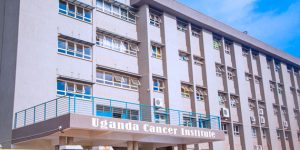
Dr Luutu Israel, senior consultant radiation oncologist and deputy executive director at the Uganda Cancer Institute (UCI), explains the human and systemic dimensions of this crisis.
He said, “Everyone in Africa is vulnerable to cancer. But luckily, the biggest killer among women, cervical cancer, is largely preventable through the HPV vaccine. We see 34,000–35,000 new cancer patients each year at UCI, which shows just how urgent early detection and prevention are.”
Dr Luutu explained that most people do not understand what causes cancer.
“Learning about risks from viruses like HPV to lifestyle and genetic factors is key to demystifying the disease,” he says.
In Uganda, cervical cancer is the most common in women, followed by breast cancer, while prostate cancer predominates among men. Among children, leukaemia is the most frequent diagnosis.
Cervical cancers alone account for 43–45% of patients seen in Ugandan clinics. Improved diagnostic modalities, including MRI, CT, and ultrasound, have increased early detection, particularly among children, although genetic predisposition also plays a role.
Uganda’s cancer care infrastructure has grown dramatically over the past two decades. In 2001, the UCI Radiation Oncology Department treated about 600 new patients per year. Today, it manages 2,500 radiation patients annually, with the institute overall seeing 34,000–35,000 new patients each year.
Modern radiotherapy machines, including AI-assisted treatment systems comparable to those in India, the US, or the UK, have been introduced, and many essential cancer drugs are provided free of charge at UCI.
Experts’ View on the Way Out
While African countries are now applying AI in detection and treatment, experts say technology alone cannot stem the rising tide. Katie Dain, CEO of the NCD Alliance, stresses the role of prevention.
“If we want to reduce the cancer burden, we also need to reduce the noncommunicable disease burden. Tobacco, alcohol, ultra-processed foods, and poor air quality are major drivers of multiple kinds of cancer. The fight against cancer is, to a large degree, a fight against NCDs, and prevention must be central.”
Experts in Kenya also highlight the need for public education. Dr Grace Wambui, an oncologist at Kenyatta National Hospital in Nairobi, notes that while treatment infrastructure has improved.
“Many women still present with advanced disease because they fear screening, or they simply don’t know the symptoms. Early detection saves lives, and community awareness must be ramped up.”
Wambui asked women for uptake of the HPV vaccine as the only way to combat cancer of the cervix.
Dr Luutu adds that combining cutting-edge treatment with robust prevention strategies, from vaccination and healthy lifestyle promotion to early screening, offers the best chance of reducing the heavy cancer toll across Uganda and the wider East African region.
Prof Omotayo Erejuwa, a specialist in endocrine pharmacology, emphasises the importance of awareness and systemic support, “There are many ways to protect people, and it is important for every country, not just Nigeria, to create awareness about the burden of cancer. Awareness helps people understand the risks and take steps early.”
He noted that cancer is a gender based sickness, but with the right intervention, one can get treatment and live out their life.
He also added that the government should make risk screenings available, ensure that each level has an oncology centre, and expand the National Health Insurance Scheme (NHIA) to cover more cancer patients and those at high risk of developing cancer. Screening is critical. Awareness alone is not enough — people need access to tools and centres where they can detect cancer early.”
Dr Lawan Peter Kaigama, a Medical Officer and Public Health Specialist, noted that World Cancer Day should be a day of awareness and encouragement, with a focus on prevention, early detection, better treatment, and patient support.
For Nigeria and Africa, it is crucial because cancer incidence and mortality are rising, often compounded by late diagnosis, limited access to treatment, and lack of awareness. It is a chance for governments, health organizations, and communities to mobilize resources and reduce stigma.
According to him, “the most common cancers vary by gender but include breast and cervical cancer in women, prostate cancer in men, liver cancer, colorectal cancer, and Kaposi’s sarcoma in areas with high HIV prevalence. Early detection and vaccination — like HPV and hepatitis B — are essential to reducing the burden.”
Prof. Abidemi of NCS emphasized the need for the government to subsidize cancer services. He called for the establishment of a cancer bank and facilities to support oncology centers.
He said the government must create a conducive environment for pharmaceutical companies, noting that some have left and others are planning to leave.
“ And they can also support local pharmaceutical companies in producing these drugs locally,” he added, ” the country cannot produce drugs locally because the government has not prioritized clinical trials.
He said some drugs in the country were tested on Caucasians. He said their genomics is not the same as that of blacks, adding that the therapeutic benefit of the drug on blacks will be reduced.
“So governments must invest in clinical trials. We have top-notch cancer researchers in Nigeria. So they can discover new drugs. You cannot just sit down and expect a drug breakthrough from outside the country. I call on the government to sponsor clinical trials in the country. Let us support cancer research in the country. The government has not paid serious attention to cancer research, which is important. I also call on TETFUND in the university commission to allocate funding to both cancer research in the country,” he said.
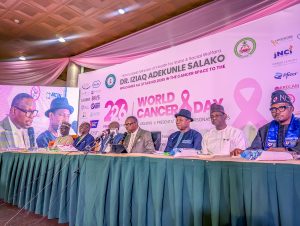
Nigeria’s Minister of State for Health and Social Welfare, Dr Iziaq Adekunle Salako, during the commemoration of World Cancer Day, launched two policy documents: the National Nuclear Medicine Policy and Strategic Plan (the first of its kind in Nigeria and the Nigeria National Cancer Control Plan 2026-2030.)
He said the documents will strengthen the relentless effort to provide clear policy pathways to improve the quality of life for cancer patients and to increase investment in cancer prevention, diagnosis, treatment, and research.
He said, “As efforts are being made to provide cancer diagnosis and treatment facilities, the Federal Ministry of Health and Social Welfare has decided to pay priority attention to cancer prevention, working with other agencies to reduce risk factors, promote screening services, and integrate cancer preventive vaccines into our national immunization programme.”

