By Ojoma Akor
Roche, a multinational healthcare company, says it is rewriting the story of breast cancer in Africa through its Africa Breast Cancer Ambition, which is geared towards achieving a 60% increase in breast cancer survival.
The organisation also advised the media to adopt new storytelling narratives that move policy, budgets, and nations.
Jacqueline Wambua, General Manager, East Africa, Roche, Kenya, made this statement on Wednesday during the organization’s Africa Press Day program in Nairobi, Kenya.
She said the organization targets achieving a 60% increase in breast cancer survival through strengthening every step of the patient journey—from early detection and diagnosis to treatment and long-term follow-up care.
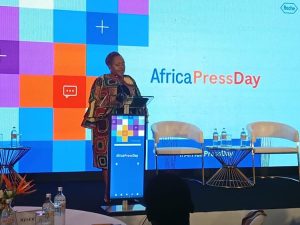
Wambua said that in sub-Saharan Africa, breast and cervical cancer strike women in the prime of their productive and parenting years.
She said, “For every 100 women who die prematurely from cancer, more than 200 children lose their mother. The loss does not end with one life—it weakens families, destabilizes communities, and slows national development.”
She highlighted that most women are diagnosed late—not because the disease is more aggressive, but because the system fails them early.
“When a woman survives cancer, families stay together, children remain in school, and communities retain economic activity,” she stated.
Wambua said progress is already happening, and a drive to improve breast cancer, not because of one organization, but because of partnerships: with governments across Africa, with the World Health Organization ( WHO) through initiatives such as the Women Integrated Cancer Care Program, and with clinicians, patient advocates, and communities.
According to her, these partnerships have shown something powerful: Africa does not need imported solutions but needs locally driven, data-informed, partnership-powered systems.
While saying that Africa’s cancer burden is projected to double by 2040, she said that many countries still invest less than 5% of their health budget in cancer care.
She said, “We cannot afford to lose another generation to diseases that are preventable and treatable. Second, health is an economic policy. Untreated disease drains national productivity. Health system resilience matters. Strong diagnostics and laboratory systems are not only about cancer; they are the backbone of preparedness for future health crises. Countries with strong laboratory systems recover faster from pandemics and better protect their economies, as we saw during the COVID pandemic.
“Fourth, distance has become a disease. Too many Africans live far from diagnosis and treatment services. Data, digital tools, and innovative delivery models can connect our rural communities to quality healthcare if we choose to invest in them.
“We will also look at the power of partnerships—how integrated models like Quix and Empower are already delivering measurable impact. Coalitions such as the Africa Breast Cancer Council are uniting leaders across sectors to drive systemic change.”
She emphasized the role of the media, saying, ” We can build hospitals, we can develop medicines, and we can strengthen health systems, but we cannot change mindsets without you. You shape how health is understood. You decide how stories are told and how they are framed.”
She said there was a need for a new narrative—one about value, our solutions, and the impact on our people.
She further enjoined the media to ask the hard questions. “Hold us accountable. Help Africa see health not as charity.”
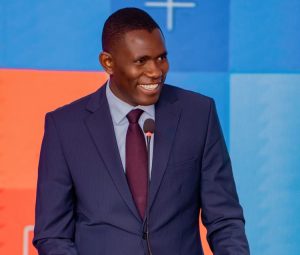
Dr. Ouma Oluga, Principal Secretary, State Department for Medical Services, Ministry of Health, Kenya, said that it has been reported that breast cancer will kill more African women this year than it did last year, not because “we lack knowledge, not because science has failed to give us solutions, and certainly not because systems do not exist.
But perhaps it is because of how systems consume information—to change, absorb knowledge, and utilize science.”
He said that more than 7,000 Kenyan women have breast cancer. All they care about is that someone cared for them, that the system worked, and that someone provided therapy that will assure them that they will be with their families tomorrow—waking up to do the things we expect from our loved ones, attending to their duties to family and nation.
He explained that the story of Africa’s healthcare system has been told for decades, but that what is more important now is how we position Africa’s healthcare systems to be responsive to the needs.
He said, “Many countries are currently grappling with a challenging landscape. This landscape is shaped by very high public expectations—not in a vacuum, but driven by reality. These include the rising burden of non-communicable diseases, particularly cancer, as well as ongoing challenges with communicable diseases such as HIV, TB, malaria, and cholera.
“We are at a crossroads. All of these are consuming significant resources. In an era of heightened public awareness, there is a high demand to do the right thing. But sometimes even the public does not know what the right thing is. And most of the time, even administrators and governments are unsure.
“I like to be practical. But there is another, bigger problem—the performance of the healthcare system itself and whether it is designed to respond and deliver the results people expect. The third issue is financing. Do we have enough money to do all the things we believe are good today?” he said.
While saying healthcare should not be the reason people die or become poor, he said priorities include making health financing the main driver and mobilizing domestic resources through the Social Health Authority.
He said he is happy Roche has signed an MOU with the Kenyan government to help reduce treatment costs and improve access.
“As we mobilize resources, we must also address cost. That is why we partner with institutions such as Roche to help reduce treatment costs and align them with benefit packages,” he said.
The Kenyan Principal Secretary also harped on the need to accelerate scientific innovation.
He said in oncology, new solutions such as targeted therapies and immunotherapies often take a long time to reach African patients—sometimes more than 10 years.
Dr. Oluga said, “By the time some therapies are adopted in Africa, they may already be outdated elsewhere. So how do we accelerate innovation adoption? How do we ensure our people have access to the same therapies that have been determined globally to be safe and effective?
Healthcare systems are often locked into old practices. Without capacity-building programs, many hospitals continue using outdated methods that do not deliver optimal patient outcomes.
Breast cancer is no longer a death sentence in many parts of the world. Many survivors diagnosed 20 years ago are living productive lives.”
He said, however, in Africa, the story is different.
“Patients often present late—not necessarily because knowledge is lacking, but because of information gaps, affordability challenges, or misdirection in care pathways. So how do we position an engine that drives innovation, catalyzes systems, and ensures the right clinical pathways?
“Ultimately, we must bring everyone together to walk on one road—to save lives and create solidarity for change.
Healthcare changes constantly. Therapies change, and health systems must change—both because of demand and because of the need to respond. If we do nothing, society will still change, often in disruptive ways. From a government perspective, I believe we carry a moral obligation. As we talk about narrative, let it be strategic and generational. Let it create value. But most importantly, let it be catalytic.”
Dorothy Nyong’o, Managing Trustee at the Africa Cancer Foundation, First Lady of Kisumu County, and member of the Africa Breast Cancer Council, Kenya, said cervical and breast cancers are among the leading cancers killing women in Africa.
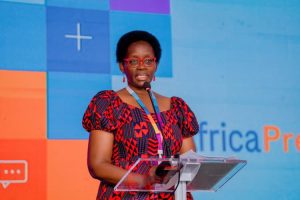
Speaking on the topic ‘ Why is it worth investing in breast cancer?’, she said statistics show that only about 50% of women diagnosed with breast cancer in Africa survive beyond five years, while more than 90% survive in high-income countries.
While noting that in Kenya discussions often focus on what the National Health Insurance Fund covers, she suggested that the social health authority should cover screening and diagnosis.
She said that in 2018, Roche partnered with the Africa Cancer Foundation, the County First Ladies Association, the International Cancer Institute, Women for Cancer, and county governments in 19 counties to establish 20 Empower clinics.
She said these clinics were revolutionary for providing free, daily, walk-in breast and cervical cancer screening services Monday through Friday.
She said, “Today, an additional 57 digital Empower clinics have been established nationwide and adopted by the National Cancer Institute, reaching over 235,000 women in Kenya. Over 3,225 women have received treatment services. Without access to information and care, many Africans will die from cancer.’
She also said that in Kisumu, cancer has been taken seriously, adding that the county government has a committed health leadership team, including an oncologist serving in health administration.