By Ojoma Akor
The Institute of Human Virology Nigeria (IHVN) is anchoring the rollout of lenacapavir, a long-acting HIV prevention drug, through a coordinated, government-led framework spanning policy, procurement, and service delivery.
Dr. Adebayo Opeyemi, Senior Program Manager at IHVN and HIV Program Lead for the Global Fund GC7 Nigeria TB-HIV Reach Integration and Impact Project (N-THRIP), said the institute’s support cuts across the entire value chain of the rollout.
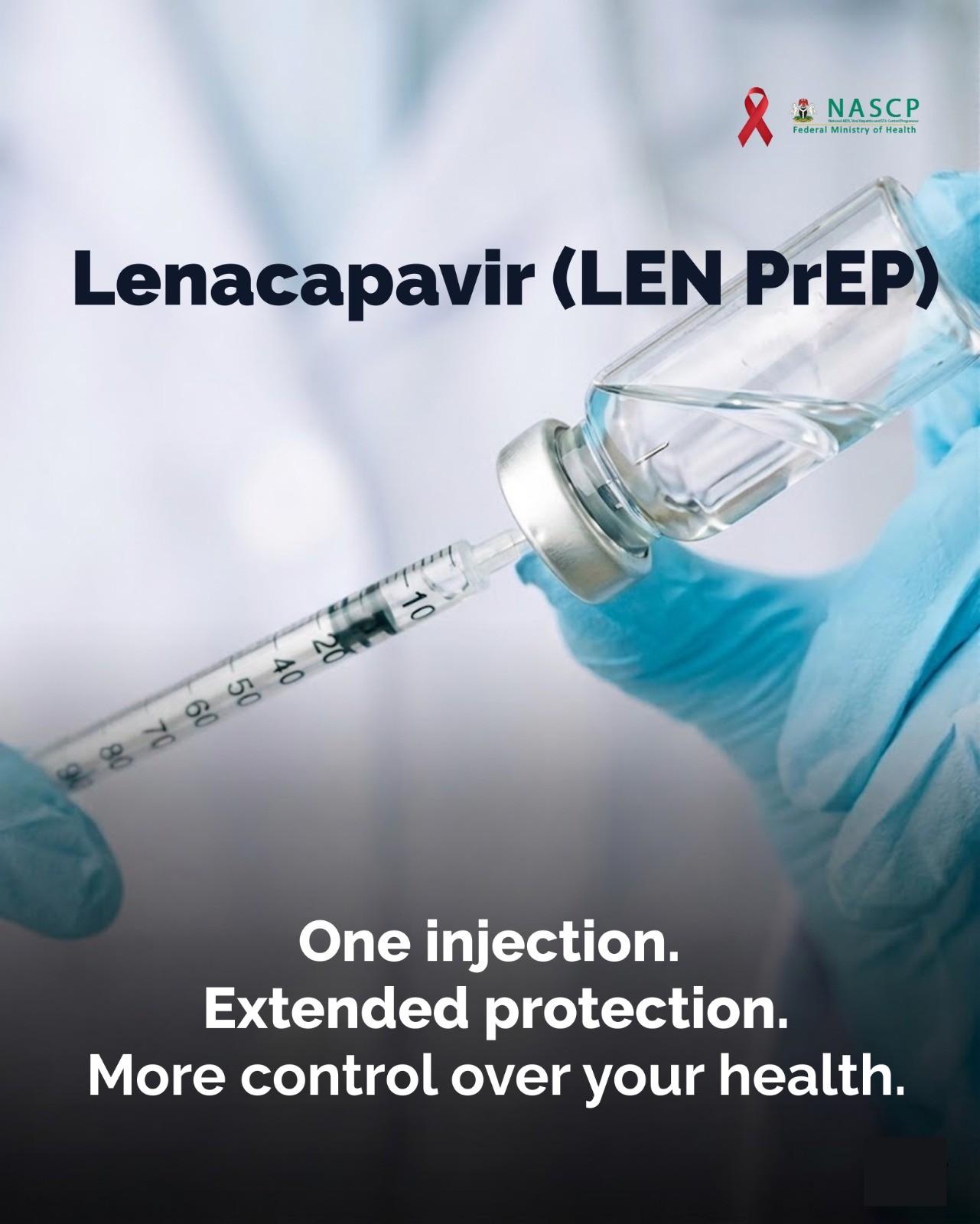
The Federal Government of Nigeria had, in March, expanded the country’s HIV prevention toolkit by introducing the long-acting injectable Pre-Exposure Prophylaxis (PrEP), lenacapavir. The twice-yearly injectable provides additional prevention options for individuals at substantial risk of HIV acquisition.

As a principal recipient of Global Fund support under Grant Cycle 7, IHVN is working closely with the Federal Ministry of Health and key agencies—including the National AIDS, Viral Hepatitis and STIs Control Programme (NASCP), National Agency for the Control of AIDS (NACA), and National Agency for Food and Drug Administration and Control (NAFDAC)—as well as state governments and implementing partners to drive the phased introduction of the drug across the country.
Dr. Opeyemi explained that IHVN played a central role in planning and coordination, contributing to the development of the national rollout strategy and implementation plan under government leadership. IHVN also provides regulatory and procurement support, working with national authorities and Global Fund mechanisms to ensure approvals and in-country availability, he said.
“Our work begins with planning and coordinating the rollout of these medications, with the government in the lead,” he said, noting that the institute supported regulatory engagement to secure approval and listing in Nigeria. Beyond approvals, he said, IHVN is strengthening supply chains—from national warehousing and distribution to health facilities to commodity tracking for accountability.
He added that the institute is also building capacity by training healthcare workers through structured programs and digital platforms, while working with partners and communities to drive demand and awareness. “We promote accurate information to help Nigerians make informed choices about prevention options, including PrEP,” he added.
The institute is also responsible for monitoring and pharmacovigilance, tracking product use, reporting outcomes, and documenting any adverse drug reactions to ensure safe, data-driven implementation. From procurement to last-mile delivery, IHVN coordinates the movement of donor-funded commodities into health facilities across the implementing states, working with sub-recipients, state actors, and Ministries of Health to align uptake with national strategic goals, Dr. Opeyemi added.
With multiple systems now in place—from regulation and logistics to community engagement—IHVN’s role underscores the complexity behind introducing new HIV prevention tools, as Nigeria seeks to translate scientific advances into sustained public health impact.
‘Roll out managed through supply controls, traceable distribution system.’
The public health expert also highlighted that Nigeria’s cautious rollout of lenacapavir is being tightly managed through eligibility checks, supply controls, and a traceable distribution system, as officials signal that nationwide expansion will depend on lessons from the current pilot phase.
“The mechanisms to ensure equity and transparency… are assured through standard eligibility criteria, risk assessment and clinical screening, availability across designated facilities, and transparent communication on service locations,” Dr. Opeyemi said.
But access remains limited—for now. He disclosed that available quantities are restricted to pilot-phase supply, warning that expansion to other states will depend on uptake, program performance, and future procurement decisions under subsequent grant cycles.
“The quantity of the products that have been brought into the country may not be enough to serve everyone,” he said. “But there will be no preferential services… There is product traceability across the various chains of command—from the national warehouse in Lagos to the last-mile delivery at facilities.”
To ease stock pressure and ensure an orderly rollout, some facilities may cap enrolment, which Opeyemi described as typical of piloting a new intervention at scale. “This is a pilot,” he said, adding that the next grant phase is underway and full implementation is expected by January.
He noted that data from the pilot would guide how much lenacapavir is procured in the next funding round, with expansion to all states likely supported by donor funding and possible government procurement.
Opeyemi also said demand patterns may shift, with some users switching between prevention options, similar to trends seen in family planning.
Dr. Opeyemi insisted the deliberate pace is strategic, not slow. “It is not taken to scale immediately,” he said. “With increased acceptance and experience in the field, we can then expand access to other Nigerians in need.”
For now, the rollout is limited to eight states, with IHVN directly implementing in Anambra, Ebonyi, Gombe, and Kwara.