By Ojoma Akor
Stakeholders in the health sector have identified ways to break down barriers to effective public health financing for non-communicable diseases (NCDs) in Nigeria.
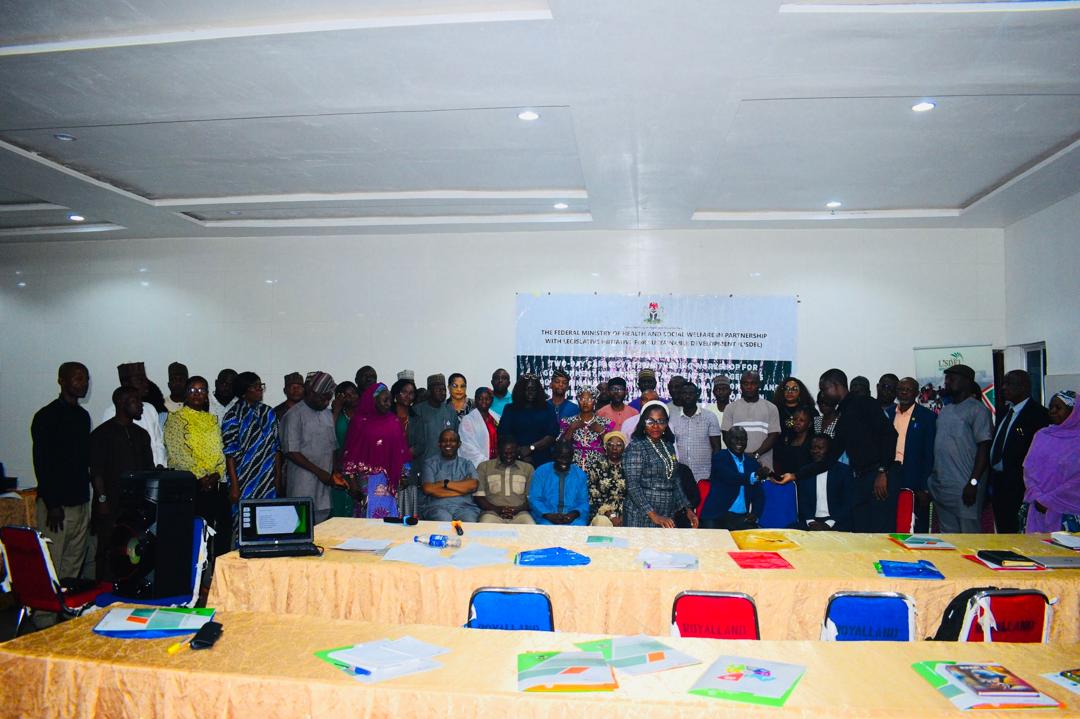
They spoke during a two-day capacity-strengthening workshop for government ministries, departments, and agencies on public financing for NCDs and the implementation of the NCD Multi-Sectoral Action Plan (NCD-MSAP).
The workshop was organized by the Federal Ministry of Health and Social Welfare, the Legislative Initiative for Sustainable Development (LISDEL), and the Global Health Advocacy Incubator (GHAI) in Mararaba, Nasarawa State.
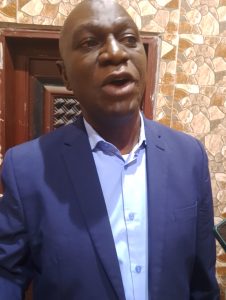
Dr. Alayo Sopekan, National Coordinator, NCD Division, Federal Ministry of Health and Social Welfare, said public financing for communicable diseases is generally good. Still, the same cannot be said for non-communicable diseases.
He said there are fewer partners interested in communicable diseases than in non-communicable diseases.
He said, “So we don’t have many partners that are willing to bring in their funds to support prevention, control, and management of non-communicable diseases. But that doesn’t mean the government isn’t doing anything. They are providing funding, but it’s very low these days. And you know, for non-communicable diseases, it is better to identify them early and prevent them.
” Even when you get the disease, you can slow down the progression. But all these require funding. That is where the challenge is specifically.”

He said that since 2015, the federal government has introduced many new taxes, such as alcohol, sugar-sweetened beverage, and tobacco taxes, adding that these taxes are meant to generate revenue and reduce consumption of the products.
He said, ” These taxes are coming in, but then some of us are saying that some of the money is supposed to be plugged back to address the NCDS that these things are causing. Because we know sugar-sweetened beverages, tobacco, and alcohol are causing NCDs.
“Money is being generated for the taxes but it not used to address NCDs but other things, so one of the reasons we are here is to open the eyes of everyone here, the ministries, departments and agencies, to see the need to support us to ensure that these taxes, even if it is just 1% of the amount can be used to address NCDs in Nigeria. Everyone will see the impact that 1% can do for us to address some of these diseases.”
Prof. Emmanuel. Alhassan, Country Lead for Health System Strengthening at the Global Health Advocacy Incubator (GHAI), said there is a significant gap in public financing for NCDs.
He said that about one-third of deaths arise from NCDs. ” It used to be one-fifth, but it’s now estimated to be about one-third of deaths, and this is very alarming. Unfortunately, funding for NCDs has been really challenging. We thank the federal government for what it did in 2024; for instance, glucometers were procured for primary healthcare centers (PHCs)across 774 local governments in Nigeria. It did not work for everyone, but at least one PHC per local government got it. It’s something, but that’s a huge gap given the number of cases.”
He said that last year, no funding was released for NCDs. “We are already almost past the first quarter of 2026, and we really don’t know what is going to happen this year. That is one of the reasons we’re here so that all the MDAs that are concerned, you know, can really have their capacity built in terms of how to advocate for releases after appropriations are made.”
He said the workshop was geared towards reviewing the last NCD-MSAP and examining the building blocks for the new one over the next five years.
” We want everyone involved to actually participate in ensuring that we have a robust one that is costed and that we can also use as an advocacy tool for increased and sustainable funding for NCDs in Nigeria,” he added.

Marcel Sati, Team Lead, Health Sector and Human Capital Development, Budget and Planning Office of the Federation, said domestic resource mobilization and innovative financing are crucial in addressing the NCDS.
He said, “The society is moving from donor funding to innovative financing, domestic mobilization of resources. So what we really need to do is adopt what the African Leadership Meeting has agreed upon: we have to look at domestic resource mobilization. And one of the best ways to do that is through innovative financing. And I think it is one area we can actually leverage on.”
Olympus Adebanjo, Policy and Advocacy Officer at LISDEL, noted that assessments of Ministries, Departments, and Agencies (MDAs) budgets showed poor alignment with the MSAP, with as little as 23 percent in some cases.
He said, “About 45 percent of MSAP activities receive no allocation at all, and even where funds are budgeted, they are often not clearly identifiable.”

Adebanjo said that the weak budget release, sometimes as low as 17 percent, further undermines key interventions such as screening, awareness campaigns, and preventive programs.
He highlighted that there was a need for other sectors beyond health, such as finance, education, environment, and infrastructure, to play active roles in addressing NCDs.
“NCDs now account for about one-third of deaths in Nigeria. This trend requires urgent attention,” he said.