By Ojoma Akor
Health and gender experts have said that tackling gender-based violence and stigma for diseases like HIV and TB is crucial to preventing and reducing antimicrobial resistance (AMR).
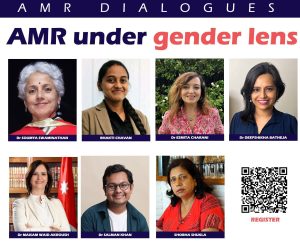
They stated this during an AMR dialogue session themed “AMR under a gender lens,” held ahead of International Women’s Day and the 70th Session of the UN Commission on the Status of Women (CSW70). It was organized by the Global AMR Media Alliance (GAMA) in collaboration with other partners.
Antimicrobial resistance (AMR) is caused by the misuse and overuse of medicines in sectors such as human health, livestock health, and food and agriculture, and it is also polluting the environment.
Dr. Soumya Swaminathan, former Deputy Director General for Programs and former Chief Scientist of the World Health Organization (WHO), said reducing or preventing AMR cannot be successful without tackling gender-based violence, as violence impacts the access of women to healthcare.
She said women are at a very high risk of intimate partner violence or domestic violence, physical or sexual, adding that this could lead to more infections.
She said, ” Because of their position within the household and the community, they are less likely to seek timely and adequate care for these injuries or infections, which could lead to drug-resistant infections.
“Whether it is sexually transmitted infections or urinary tract infections, or reproductive tract infections, or pelvic inflammatory disease, all of these are linked with sexual violence and an increased risk of antibiotic use. Also, even if the woman seeks care, follow-up is often poor. She may have taken a partial course of antibiotics or the wrong doses.”
Dr Swaminathan who is also the Chairperson, MS Swaminathan Research Foundation; and former Secretary, Department of Health Research, Ministry of Health and Family Welfare, Government of India and former Director General, Indian Council of Medical Research (ICMR) added that women facing an unplanned pregnancy who go for an unsafe abortion in some cases, are also at higher risk of AMR.
“From an intersectional perspective, here is a woman who lives in a rural area, she is also a small farmer, she has some livestock, she does some agriculture, and she has a family to look after. And she is alone because she has a migrant husband. And therefore, she has less access to health centers. She has less financial autonomy as well. In such a situation, she would probably be more likely to either neglect infections or take inappropriate treatment, ” Dr. Swaminathan stated.
She added that we must include gender-based violence indicators in AMR National Action Plans, recognizing that sexual health and violence services are hotspots for antibiotic exposure, and must also include gender-sensitive stewardship indicators.
Also speaking, Bhakti Chavan, a survivor of drug-resistant TB, said diseases like TB or HIV/AIDS carry a huge stigma in society, especially for women. She said that in many communities, a woman diagnosed with TB or HIV is judged not only as a patient but as someone who has brought shame to the family.
Chavan is also a member of the WHO Task Force of AMR Survivors said, “Her character, her marriage prospects, and even her abilities to be a good wife, daughter, and mother are questioned. I have seen many women hide their illness because of this stigma. They delay testing, they avoid going to the clinics, some take medicine secretly, and others stop treatment early to prevent family members or neighbors from finding out about it”.
Dr. Esmita Charani, Associate Professor at the University of Cape Town, South Africa, said the burden of disease predominantly remains in populations with the least access to resources, including antibiotics, to treat infections effectively.
According to her, the power differential between the patient, the end user, and the healthcare provider is very strong and is influenced by gender. She said it is also affected by gender norms and roles within society and within healthcare services.
She said, “Women often have the least power in being able to negotiate and advocate for themselves within the healthcare settings, whether they are healthcare professionals or patients. Women often put their own healthcare needs behind those of other family members. Women often have the unrecognized and unspoken role of care providers. And what we saw in hospitals in India was that women would often come in as carers for their family members, not necessarily seeking care themselves.
“Also, when there is out-of-pocket expenditure on healthcare, often male family members might be selected over female family members. We need to recognize this and identify how we can leverage power for positive outcomes.”
Dr. Charani further said that we need an intersectional lens because our position within society, within the family, within the community in which we live is very much dependent on gender and also on our religion, culture, caste, our migration status, or on race and identity in some settings.
” We have to take an intersectional lens to understand how access is compromised based on intersectional identities and also how we can leverage the power that we have within the community to develop interventions that are more likely to be taken up,” she said.
Dr. Deepshikha Bhateja, Principal Research Scientist at the Indian School of Business and Visiting Fellow at One Health Trust, highlighted norms around menstruation, caregiving responsibilities, suitable jobs for women, son preference, pregnancy, and control and ownership of financial assets.
While noting that all of them reduce access to Water, Sanitation, and Hygiene ( WASH), she said they also lower education and awareness among women and prevent women and girls from seeking healthcare freely.
“This impacts the intermediary drivers of AMR, which increases susceptibility to infection among girls and women. It reduces their health-seeking behavior and ability to seek and afford essential antibiotics and quality healthcare, and leads to inappropriate diagnosis and management by healthcare providers. This, in turn, impacts AMR outcomes of inadequate access to essential antibiotics, lack of appropriate diagnosis, and leads to increased antibiotic intake and increased AMR,” she added.
Dr. Salman Khan, former member of the Quadripartite Working Group on Youth Engagement for AMR and Youth Engagement consultant at ReAct Asia Pacific, says AMR is a deeply social problem.
“We often frame AMR as a technical problem where microbes evolve, drugs fail, and antimicrobial pipelines dry up. But AMR is shaped by those who have power, whose health is prioritized, who control resources, and whose voices are ultimately heard in decision-making”, he said.
Dr. Mayssam Akroush, Founding President of The Pan Arab Women Physicians Association, on her part, said women can play a leading role in combating irrational antibiotic use, which fuels AMR.
She said, “Women are the head of the pyramid and a very important part of the equation. They are mothers, leaders, teachers, prescribing doctors, and pharmacists who sell the product.
“So they are in a great position to lead the change on irrational antibiotic use. As a mother, she might be in a hurry to recover and might need to buy the antibiotic for herself. But as a mother, she is also the decision maker for her child’s health- whether to give or not to give the antibiotic.
“She might be the only one who can change the mindset of the youth on using antibiotics for their health. She should be the target person in our campaigns to educate women and, in turn, the whole population on how, when, and whether to use antibiotics. Women as caregivers, as educators and decision makers, can be our targeted audience for any AMR campaign”.
Shobha Shukla, Chairperson of the Global AMR Media Alliance (GAMA), said that a feminist response to preventing AMR is critical.
She said AMR and other health responses must have a feminist response, which warrants a development justice model based on care and solidarity with one another, where no one is left behind in the truest sense.
She said, ” In 2024, the WHO released its guidance on addressing gender inequalities in national action plans on AMR. This guidance provides practical recommendations for countries to integrate gender responsive approaches into AMR policies by addressing key gender disparities in the prevention, diagnosis, and treatment of drug-resistant infections.”