By Richard Olukolade
Menstruation is a natural phenomenon for young and older females and is an indicator of a healthy reproductive system in adolescent girls and women. However, the reality of the absence of functional water, sanitation, and hygiene facilities in many public places and communities in Nigeria has made menstruation a burden for adolescent girls and women.
However, the galvanized interventions and drive at global and national levels have yielded a positive impact in Nigeria with the government’s launch of the first in-kind five-year national Menstrual Health and Hygiene Management (2025-2030) policy, aimed at promoting menstrual health across the 36 States and the Federal Capital Territory (FCT). These states are stakeholders in the development of this policy framework, with the support of development partners.
As laudable as this intention was, this policy must be domesticated in all the states of the federation if the goal and objectives are to be fully harvested. Thus, there is a need for a clarion call to policymakers and implementers to actualize the domestication of the Menstrual Health and Hygiene Management policy across all states in Nigeria.
Menstrual Health and Hygiene (MHH) is the bedrock of women’s and adolescent girls’ well-being and is essential for their healthy growth and empowerment. More than 300 million women worldwide menstruate every day.
Yet, MHH remains a pressing public health and social issue plagued with serious challenges. Monthly periods are normal for women and adolescent girls, but all too often, this natural event of life is seen as shameful and dirty.
The range of challenges confronting MHH includes a lack of access to water, sanitation, and hygiene (WASH) facilities, especially in public places such as schools, markets, and motor parks. Constraints of access to affordable menstrual hygiene products, including limited education and empowerment on menstrual health, cultural stigma, as well as harmful norms and practices around menstruation, are part of the critical problems being experienced by women and girls.
In Nigeria, approximately 25% of women and girls experience period poverty, compelling many to use unhygienic alternatives like rags, paper, or old clothes during menstruation.
A major contributing factor is the staggering spike in menstrual product prices. Girls in school experience indignity in the management of their menstrual hygiene, which in most cases affects school retention, attendance, and completion.
Specifically, during menstruation, girls faced challenges ranging from fear, confusion, anxiety, misconceptions, cramps, nausea, dizziness, general discomfort, headache, vomiting, loss of appetite, and waist and stomach pains.
The struggle and promotion of gender equality have remained sustained over time, with significant global attention, as reflected in the Convention on the Elimination of All Forms of Discrimination Against Women (CEDAW), the Maputo Protocol on Women’s Rights, and the current Sustainable Development Goals (SDGs).
The challenges of MHH being faced by women, adolescent girls, and persons with disabilities contravene the 2030 United Nations (UN) Sustainable Development Goals of (1) No poverty, (3) Good health and well-being, (4) Quality education, (5) Gender equality, (6) Clean water and sanitation, and (8) Decent work and economic growth.
The importance of MHH has been consistently recognized globally by the United Nations Human Rights Council at its 50th (2022), 53rd (2023), and 56th (2024) sessions.
A panel discussion on menstrual hygiene management, human rights, and gender equality was held during the 50th session to discuss the challenges and the solutions to MHH under relevant provisions of international human rights law.
At the latter session, a resolution on MHM, human rights, and gender equality was adopted, thereby highlighting the essential role of MHH in advancing human rights to health and gender equality.
The resolution identifies universal access, irrespective of geographical location or economic status, to affordable, safe, and clean menstrual hygiene products; access to WASH facilities in public and private places; and awareness, sensitization, and education, including the integration of menstrual health management into relevant national policies.
Thereby stressing the fact that MHH interventions can help overcome obstacles, by fulfilling the unmet demand for menstrual hygiene products; as well as protecting the dignity, confidence, and strengthening the sexual and reproductive health, particularly among adolescents.
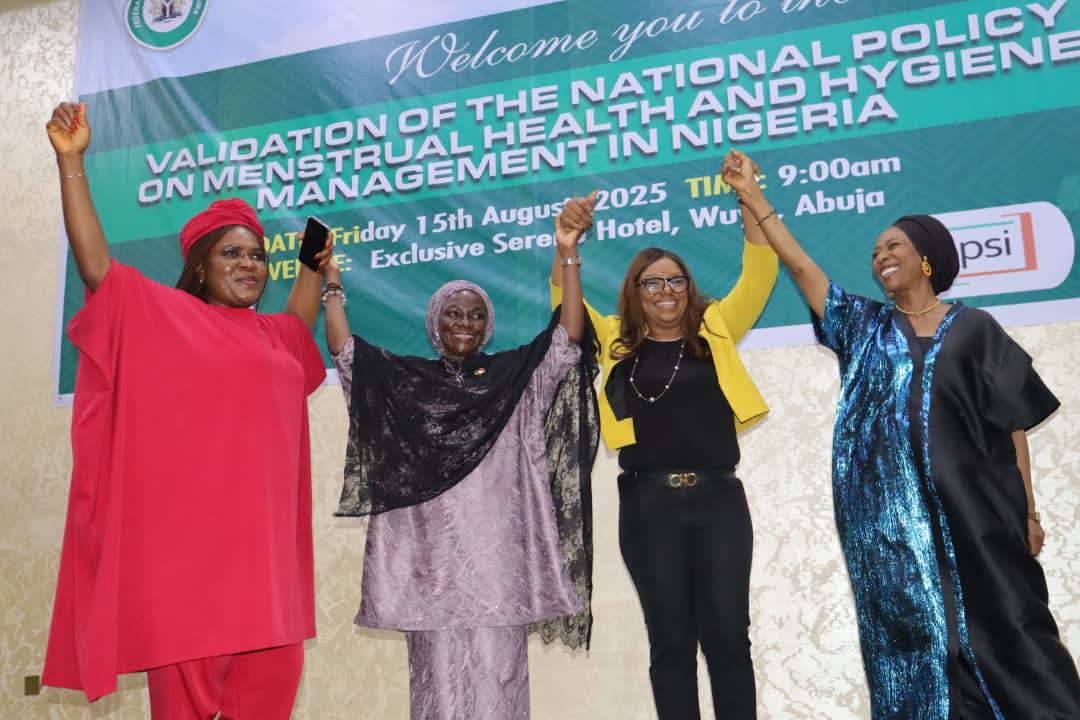
On Friday, August 15, 2025, Nigeria validated and launched its first-ever nationwide Menstrual Health and Hygiene Management (2025-2030) Policy, geared towards embedding menstrual dignity into education, health, and peace-building strategies.
The National Policy on Menstrual Health and Hygiene Management (MHHM) provides a strategic framework to ensure that every woman and girl in Nigeria can manage menstruation safely, hygienically, and with dignity, while at the same time addressing other concomitant issues relating to WASH infrastructure, education, and the elimination of stigma and discrimination.
Six months down the line, the MHHM policy is yet to be domesticated in many states of the federation. While the push may have slowly started in some states with the support of development partners, the expected gains for adolescent girls and women would remain a mirage if the policy is not activated at the state level, and in time.
In addition, the drastic impact and change that the adoption of this policy would have on the WASH landscape, and the attendant influence on the approach to WASH infrastructure and systems in many states, should be the driving force towards accelerating the domestication of this policy, for the good of all citizens.
Olukolade is affiliated with Ready Pen Consult Limited, and can be reached at richkolade@gmail.com