By Ojoma Akor:
Experts in reproductive health have called for increased efforts towards closing gaps in adolescent reproductive health at both national and sub-national levels of the country.
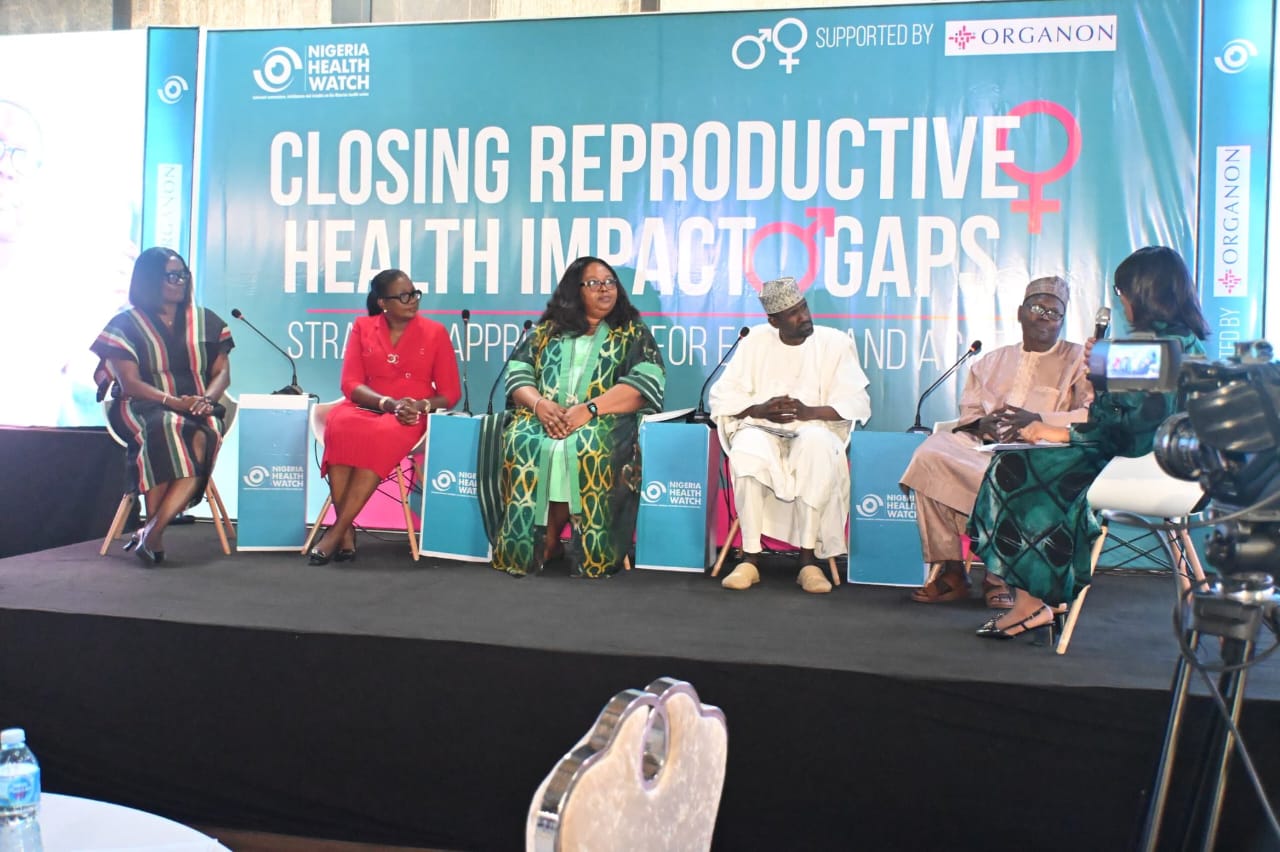
They made the call Thursday in Abuja, during a national policy dialogue organized by Nigeria Health Watch. The dialogue was themed:“Improving Adolescent Access to Quality Sexual and Reproductive Health Services”.
They said there was urgent need for strategies to improve equitable access to sexual and reproductive health services for adolescents in Nigeria.
The Managing Director of Nigeria Health Watch, Vivianne Ihekweazu, said, too many people especially young people, rural women and girls, underserved communities, even in major cities are not having access to basic reproductive health services and commodities.
She said, “We cannot talk about achieving Universal Health Coverage, or SDG 3 and 5, while overlooking the reality that access to contraception, maternal and newborn care, safe abortion services, STI treatment, and sexual health education remains inconsistent, underfunded, and out of reach for millions of Nigerians.”

Quoting the Nigeria Demographic and Health Survey (2023–24), she said Modern Contraceptive Prevalence is still only 15.3% (CPR is 20.3%) among women aged 15–49, while the unmet need for family planning for the same group is 21%.
She highlighted that there is a significant gap in access that needs to be closed, adding that by 2050, Nigeria is projected to have a population of approximately 377 million people, making it the third most populous country in the world, after India and China.
She stated that the country continues to face the same recurring issues: low funding, poor integration of services, stockouts, weak political will, and fragmented coordination.
“Even worse, in 2025. We are warned of a looming public health crisis and that crisis is already here. Federal funding for family planning has been slashed by 97%, dropping from ₦2.2 billion in 2024 to just ₦66 million this year. There is zero allocation for contraceptive commodities and no provision for counterpart funding to attract donor resources,” she stated.
She added that the funding cuts are impacting Nigeria’s already fragile Sexual and reproductive health and rights ( SRHR)
services.
She further said the country cannot close reproductive health impact gaps without confronting the funding crisis head-on.
“Without resources, policies remain promises. Without commodities, services become empty. And without accountability, the most vulnerable young people, rural women, those already left behind will bear the heaviest cost.
“However, we must not forget the power and role of the private sector. As the public sector struggles, private actors from pharmacies to logistics to digital platforms are already filling critical gaps. Nigeria’s FP2030 commitments offer a framework, but they are not self-executing,” she advised.
Dr Tomi Coker, Commissioner for Health, Ogun State, said the strategic approach introduced by The Challenge Initiative (TCI) helped the state with sustainable financing for reproductive health.
She said, “We have integrated this into our annual operational plans and state budgets. This allows us to know exactly what is needed, and then we mobilise resources domestically.”
Dr. Binyerem Ukaire, Director of Family Health, Federal Ministry of Health and Social Welfare said the federal government is committed to addressing challenges with adolescent reproductive health in Nigeria.
While saying that Nigeria has historically relied on external partners for up to 80% of family planning funding, she said that many policies need updating to reflect current needs and realities.
Dr. Taiwo Johnson, Director of TCI Nigeria, said stock-outs affect up to 70% of health facilities in some states.
Johnson said that Nigeria requires $45 million annually for contraceptives, adding that however only 62% of it is funded, and majorly by donors.
He said, ” Ogun, Kaduna, and Lagos have shown how institutionalising high-impact practices can drive local ownership and improve access.
Also , Dr. Fatima Bunza, Country Director, Tiko,
said technology gives girls the power to access, reassess, and act safely and confidently.
She said, “Tech isn’t just a tool, it’s a bridge to equity, trust, and accountability in SRHR service delivery.”