By Ojoma Akor
The Office of the Senior Special Assistant to the President on Women’s Health says it is very committed to prioritizing and advancing women’s health in Nigeria.
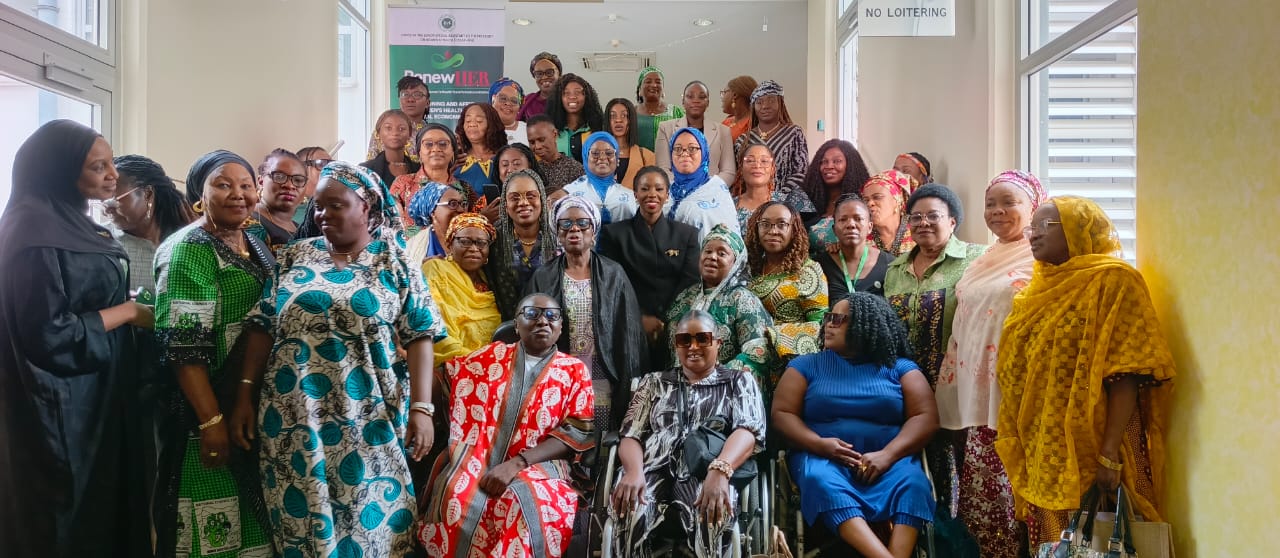
Dr. Adanna Steinacker, Senior Special Assistant to the President on Women’s Health, stated this during a women’s health stakeholders meeting in Abuja.
She said her office would continue to collaborate with the Federal Ministry of Health and Social Welfare, and women’s groups across Nigeria to strengthen women’s health outcomes.
Steinacker said the engagement forms part of the scale-up of RenewHER, the Presidential Women’s Health Transformation Initiative, “as a coordinating platform to align policy, advocacy, innovation, and service delivery around measurable impact for women and girls across Nigeria.”
She said, “This meeting was designed as a listening, alignment, and co-creation forum. We haven’t yet reached the co-creation aspect because we’re still listening and aligning on the issues across the life course. This is only the beginning of the engagement, but I have no doubt we will co-create solutions together. We recognize all stakeholders in this room as partners whose lived experiences and frontline insights are essential to effective implementation.”

She further said she took notes from presentations by various groups and associations, including civil society organizations, health professionals, youth-led and youth-focused organizations, media practitioners, and some government representatives and technical advisors, to strengthen collaboration on the women’s health agenda.
She highlighted that some of the issues include mental health, maternal health, especially around unwanted pregnancy, early pregnancy, challenges of access, sexual and reproductive health, especially STIs, and infertility.
Others are menstrual health and hygiene, access to products, access to contraceptives, protecting women’s dignity, gender-based violence, early childhood malnutrition, cervical and breast cancer, and menopause, among others.
While saying that many barriers were identified, she added that one of the major ones was the knowledge gap.
She said, “What care is available? Do women know that it’s available so that they can access it? Implementation of policies focused on women’s rights, focused on GBV, and also on the knowledge gap. I believe someone raised the point that religion and culture can affect the dissemination of information. We also talked about service delivery and quality of care.”
She added that the engagement underscores the importance of coordinated action, community partnership, and constructive media narratives in advancing women’s health outcomes nationwide.
Moji Makanjuola, Executive Director of the International Society of Media in Public Health (ISMPH), said the media has a critical role to play in advancing women’s health. She said they have identified system gaps and barriers to access, highlighted them, and proposed solutions.
Dr. Adedolapo A. Fasawe, Mandate Secretary for Health and Environment, Federal Capital Territory Administration (FCTA), said that investing in women’s health is investing in the nation.
She said, “Women are the leaders. It will shock you to know that climate change affects women more than any other group. Let us stop talking and start acting. Once again, FCT is available for data collection, trials, and interventions. When you focus on women, you are building the nation and generations yet unborn.”
Dr. Zainab Mohammad-Idris, National President of MWAN, said her organization was ready to collaborate with the presidency. She said MWAN has ongoing initiatives in maternal and child health and that presidential support would enhance its reach and effectiveness.