By Ojoma Akor
Nigeria will host the highest-level global ministerial meeting on antimicrobial resistance (AMR) on African soil in Abuja this year.
Ministers from over 100 countries are expected to take part in the 5th High-Level Ministerial Meeting on antimicrobial resistance (AMR), slated for June.
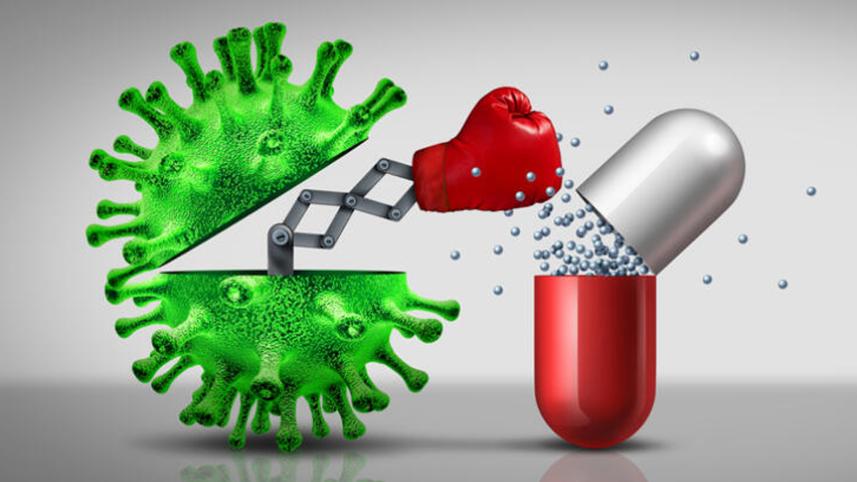
AMR or drug resistance is a problem driven by misuse and overuse of antimicrobial medicines – including antibiotics, antivirals, antiparasitics, and antifungals – and results in critical medicines losing effectiveness to treat infections.
As a result of drug resistance, medicines become ineffective, and infections become increasingly difficult or impossible to treat. Misuse and overuse of medicines are rampant in animal health and livestock, food and agriculture, and human health, and they pollute our environment.
Dr. Ayoade Alakija, Ministerial Global Envoy on AMR, Government of Nigeria, disclosed this on Monday during a media briefing organized by the Global AMR Media Alliance (GAMA) in collaboration with the Nigeria AMR Media Alliance (NAMA), ahead of the meeting.
She said the 5th High-Level Ministerial Meeting on AMR would be held on the theme: “One Health — Advancing Global AMR Commitments through Local Action” from 28th to 30th June 2026, with high-level delegations from over 100 countries, along with the presidents of a few countries, such as Botswana, Ghana, and Nigeria.
The envoy said President Bola Ahmed Tinubu would host the welcome before the meeting in Abuja opens.
She said, “The 5th High Level Ministerial Meeting on AMR would be different because not just ministers of health but also ministers of agriculture, environment, and finance are being invited to take part to address AMR in all sectors (such as animal health and livestock, food and agriculture, and our environment) – and not just human health.
“AMR is not just about human health and protecting just our medicines, but also about prevention and protecting our animals, plants, and our environment. We need to ensure that not only humans are not harmed due to AMR but also our animals, agriculture, and food systems, and our environment are kept safe so that we all can live in harmony together.”
She further said, “If we invest US$1 in AMR, then the return-on-investment is 11 times.”
Dr. Alakija said the upcoming 5th High Level Meeting in Nigeria would focus more on solutions to address the challenge AMR is posing, adding, ” We also need to ensure AMR response is fully financed, including prevention, surveillance, water, sanitation, and hygiene. It is strategic investments that our countries and our communities need.”
She said, “If we do not have money to fund our AMR multisectoral action plans fully, then how are we going to get the work done? So, we have to involve those who handle finances. Media is critical for accountability, but also critical for awareness, and keeping the communities we serve involved.”
Dr. Alakija referred to the Abuja Declaration 2001, in which African countries committed to investing 15% of their annual budgets in health. She hopes that the upcoming meeting will also play a historic role in sustainable financing for AMR response.
She said, “Earlier in April 2026, I was at the One Health Summit in Lyons, France, hosted by President of France Emmanuel Macron, where many of the people at the highest level, who were present there, have confirmed their attendance (for the upcoming meeting in Nigeria).
“Nigeria has been involved with the integrated approach for a while, as all sectors need to speak to one another and work in concert with one another. AMR has typically been viewed through the lens of high-income countries. We need to address AMR, recognizing the gaps in all countries and contexts, especially low- and middle-income countries, and ways to bridge the gaps in prevention of infectious diseases, as well as gaps in stopping misuse and overuse of medicines in the food and agriculture sector, animal health sector, and environment, along with the human health sector.
“AMR commitments like the UNGA Political Declaration 2024 need to be translated into not just actions but local actions, which are critical.”
She said the 5th High Level Ministerial Meeting on AMR itself is just a moment in time, noting that the larger objective is to advance and to sustain global efforts to curb AMR in Nigeria, Africa, and globally.”
Dr. Jean Pierre Nyemazi, Director of Quadripartite Joint Secretariat on AMR, said AMR is a big threat and continues to kill many people, especially in low- and middle-income countries (LMICs) and the Global South.
He said AMR is among top 10 global health threats and threatens animals, food systems, economies and our environment, adding that all quadripartite agencies are supporting the upcoming high level ministerial meeting on AMR in Nigeria including the World Health Organization (WHO), Food and Agriculture Organization of the United Nations (FAO), United Nations Environment Programme, and World Organisation for Animal Health (WOAH).
He said the 5th High-Level Ministerial Meeting on AMR is a key moment to carry forward the momentum from the UN General Assembly High-Level Meeting on AMR 2024 – as well as to translate the political commitments made there into country-level delivery. ”
Dr Nyemazi said, “Upcoming meeting also builds upon the Jeddah commitments made at the 4th High Level Ministerial Meeting on AMR hosted by Saudi Arabia in 2024.
“In Jeddah, we agreed on the Troika mechanism to keep continuity from one meeting to another. So, past discussions held at the 4th High Level Ministerial Meeting on AMR in Jeddah in 2024 are informing the organization of the 5th Meeting in Nigeria in 2026.”
While saying that the task for the upcoming 5th High Level Ministerial Meeting on AMR in Nigeria would be to enabling the acceleration of implementation of multi-sectoral national action plans on AMR, he said it would also be enabled by effective governance at all levels, sustainable investment at all levels, and walk the talk on the theme of One Health for advancing global AMR commitments through local actions.
He highlighted that the media is a strategic partner in informing, connecting, and holding us accountable, adding, “Evidence-based reporting ensures that AMR is visible as a development, equity, and sustainability issue; it shapes the public understanding, support, behavior change, and sustains pressure for measurable progress.”
Dr. Nyemazi said most attendees at the 1st and 2nd High-Level Ministerial Meetings held in 2014 and 2019 were ministers from European countries.
“We see the focus changing from health to One Health, which means we are having more representation from ministries of animal health, food and agriculture, and environment, along with human health. When we talk about AMR prevention, we are talking about preventing AMR across all the sectors (and not just in human health),” Dr. Nyemazi said.
Reducing AMR deaths by 10% by 2030
Dr. Nyemazi said one of the targets of the Political Declaration adopted at the UN General Assembly High-Level Meeting 2024 was to reduce AMR deaths by 10% by 2030 (compared to 4.9 million AMR-associated deaths recorded in 2019).
“Simple, cost-effective strategies that impact public health, such as handwashing, can help. We also need to ensure equitable access to essential antimicrobials. These are a few steps governments can take now,” he said.
Shobha Shukla, Chairperson, Global AMR Media Alliance (GAMA), said, “All of us are at risk of AMR. But in the absence of strong public systems, those in low- and middle-income countries – and especially those who are underserved are at a much heightened risk of AMR. We have to do better in protecting the medicines that save us. We also have to do better in saving lives from preventable infections as well as ensuring right and timely diagnosis and right treatment, care, and support for everyone, leaving no one behind.”
Global AMR Media Awards 2026 launched.
The third Edition of the Global AMR Media Awards 2026 was announced during the virtual briefing. Nigeria AMR Media Alliance (NAMA) Chairperson Ojoma Akor announced the 1st Nigeria AMR Media Awards 2026. Nepal AMR Media Alliance Chairperson Kalpana Acharya announced the 2nd Nepal AMR Media Awards 2026. Lata Mishra of India AMR Media Alliance announced the 2nd India AMR Media Awards 2026, and Dr. Ijyaa Singh of ReAct Asia Pacific announced the 1st Kerala AMR Media Awards 2026.
Two special award categories were announced: AMR survivor Vanessa Carter (founder of The AMR Narrative and Chairperson of the WHO Task Force of AMR Survivors) announced the #PutPeopleFirst award category to shine a spotlight on media reporting that features the voices of AMR survivors. Likewise, a special award category is for global media reporting on the 5th High-Level Ministerial Meeting on AMR in Nigeria.
The 1st Nigeria AMR Media Awards 2026 will be held in collaboration with Art for Health Initiative, a nonprofit platform focused on innovative health communication through art, AI, storytelling, and creative media. The initiative will support the award of N200,000 for the first prize, N150,000 for the second prize, and N100,000 for the third prize.
Founder of Art for Health Initiative (formerly Art For Health Naija), Chidera Rosecamille Aneke, said AMR is one of the organization’s areas of focus.
She said, “We would love to support the NAMA awards to advance innovative storytelling that communicates antimicrobial resistance (AMR in ways the audience can understand. The Initiative works at the intersection of storytelling, media, and the arts to drive public understanding and action on critical health issues like AMR. Through this support, it aims to elevate impactful, innovative, solutions-driven journalism, with outstanding stories to be recognized at an awards event in November.”