By Ojoma Akor
Stakeholders in family planning have harped on the need for Nigeria to make improvements in the implementation of its family planning commitments in other to achieve FP2030 goals.
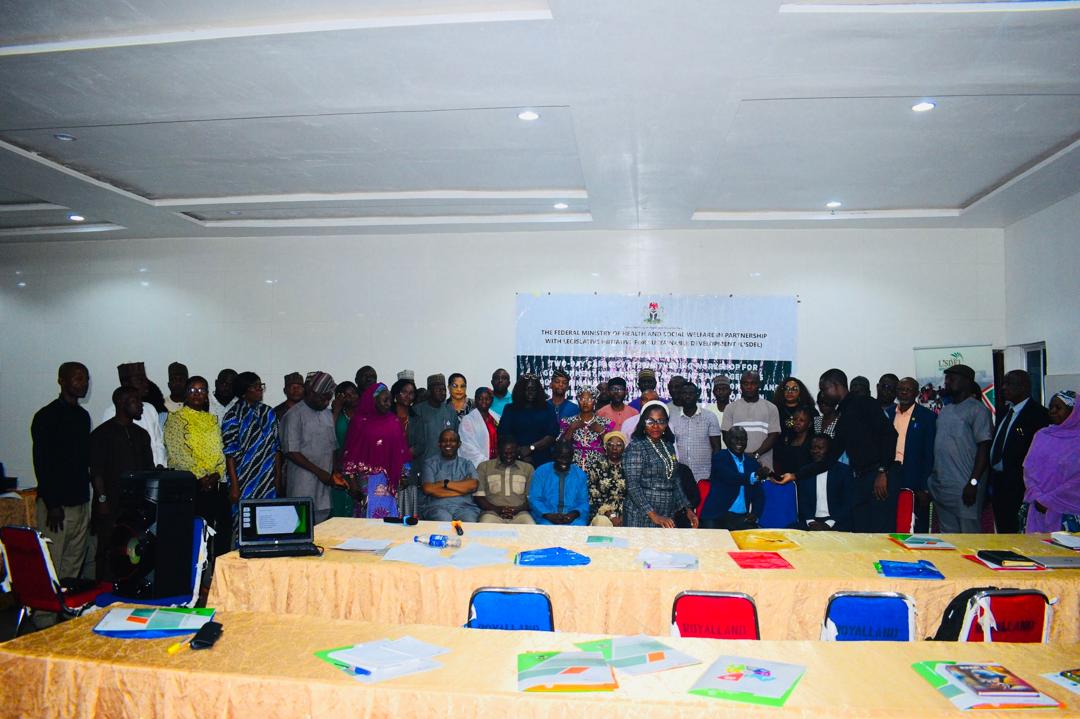
They made the call Thursday in Abuja during the validation meeting of the Nigeria FP2030 commitments’ motion tracker progress report (2024), organized by the Africa Health Budget Network (AHBN).
Nigeria’s FP2030 commitments aim to increase modern contraceptive prevalence rate (mCPR) to at least 27% by 2030, increase annual funding by allocating at least 1% of national and state health budgets to family planning, and improve the family planning supply chain to reduce stock-outs.
The commitments are part of a national vision to empower women and girls with equitable access to quality family planning and reproductive health services to improve maternal and child health, and contribute to human capital development.
Dr Ejike Oji, Chair, Management Committee of the Association for the Advancement of Family Planning (AAFP) said Nigeria signed eight commitments in the FP2030 commitments for family planning.
He said, ” Improvements in the commitment is key to attaining FP2030. With the way we are going, unless we improve remarkably in those commitments, it will be very difficult for Nigeria to make 2030 targets.
“That is why as a civil society person, my responsibility is to look at making sure there is accountability in the use of the resources.”
He explained that the validation meeting is for stakeholders to agree or disagree and also bring in their own insights.
“Nigeria signed eight commitments in the FP2030 commitments for family planning. From our assessments, some of them are amber, red or green. Some of the commitments that are amber should actually be green. The amber for instance indicates that something is happening, but it has not gotten there yet.”
The expert said that at the beginning of this year, there were hues and cries about funding line for family planning at the Federal Ministry of Health.
He said concerted efforts including meetings with PVAC by stakeholders on funding for commodities revealed that there was 5.77 billion for family planning, commodities purchase for the National Primary Health Care Development Agency ( NPHCDA).
“our responsibility now is, how is money going to be used to make sure it’s adequately and accountably used be to meet our requirements,” he added.
Amina Mohammed , Program delivery Manager at AHBN , said that the motion tracker approach report was an accountability mechanism; a progress to look at the Nigeria FP2030 commitments.
She said, “So we look at the contribution of stakeholders. We also look at some indicators to understand where we are currently in terms of implementation. How far along are we? What are the challenges? And we also look at the indicators. Some of them might be green, meaning everything is going well and good. Some of it is amber, meaning it is ongoing, but it’s not where we want it to be, and then it could be right, meaning a lot of action is happening.”
While saying some of the indicators are good, especially coordination of platforms, she added that, “we are seeing improvements in the technical working groups. And I reckon we would see a lot more improvements if it was reflecting 2025 because this is for 2024 Now. alot has happened in regards to finance, releases, more commitment of stakeholders, even with that being said, even the 2024 one, we are still seeing progress.”
She said the meeting was also convened because stakeholders have gotten a lot of feedback both at the national and sub-national level and need to collectively agree on priority advocacy actions.