By Godwin Ntadom
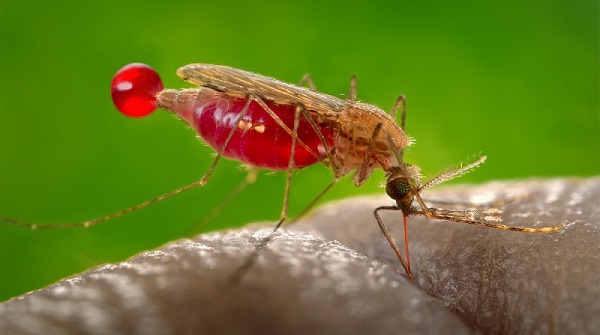
No one knew its origin, nor its cause. The only knowledge available then was that it was a disease of bad air from marshy lands, from where it obtained its name – mala-aria. The puzzle was too intricate to decode; Aristotle, Galeus, and even Hippocrates, the father of medicine, could not unravel the mystery of the ague. By the turn of the 19th century, millions of children, pregnant women, and soldiers on the battlefield had succumbed to the disease.
In a flow of knowledge that started in the 1880s, the monster that had kept the entire world in captivity for millennia was defanged within two decades. In 1880, while working in Algeria, Sir. Charles Alphonse Laveran, a French physician and a military officer, detected a parasite-like organism in the blood smear from a person who had just died of malaria.
Around the same period, while working in China, a Scottish physician, Sir. Patrick Manson, who had earlier established that mosquitoes transmit filariasis in humans, hypothesized that blood-feeding arthropods could transmit other human pathogens, including malaria. And by 1897, while working in India, Sir Ronald Ross, a British military surgeon, provided proof that the bites of female Anopheles mosquitoes transmitted malaria.
With Laveran’s findings, Manson’s postulations, and Ross’s 1897 publication in the British Medical Journal, the mystery surrounding malaria was laid bare for the scientific world. The malaria “human-vector-parasite-disease nexus was established, and by the year 1900, the life cycle of the malaria parasite in both the mosquito and in humans was fully defined. These revelations set the stage and marked the beginning of the end of the world’s deadliest disease.
The early 20th century was marked by measures and countermeasures against a disease that was once a global threat. By the middle of the century, several European countries had eliminated it through environmental manipulation targeting the mosquito vector. These efforts also led to a reduction in the incidence of yellow fever, dengue fever, lymphatic filariasis, and a host of other mosquito-borne diseases.
The discovery of synthetic quinine in 1918, chloroquine, and Dichlorodiphenyltrichloroethane (DDT) in the 1930s set the stage for a global showdown against malaria, which reached its crescendo in 1955 with a call for eradication at the 8th World Health Assembly meeting in Mexico. This watershed moment led to the eradication of malaria in the few remaining European countries within less than 10 years of its implementation. The “Global Malaria Eradication Program” did not include Africa because it lacked the health infrastructure to pursue the agenda.
Major lessons learned from the elimination of malaria in Europe and America were strong political commitment, the adoption of multifaceted control strategies, sustained pressure on the vector population, tracking of the infected population and appropriate treatment, and surveillance.
The Garki project, conducted in Nigeria from 1969 to 1976, and other projects conducted in several regions across the tropics, provided valuable insights into the qualitative dynamics of malaria transmission in sub-Saharan Africa and, most importantly, in tropical Africa. Malaria transmission intensity and vectorial capacity have remained high, exceeding the critical thresholds required to maintain endemicity and sustain infectivity.
In the doldrums across Africa and other regions where malaria had posed a major threat, the Amsterdam Ministerial Conference was convened in 1992 to awaken the consciousness of leaders, especially in Africa, where malaria was still responsible for over a million deaths annually. No noticeable commitment was made by any leader of malaria-endemic countries until 2000.

Roll Back Malaria initiative
In April, 2000, President Olusegun Obasanjo hosted the African Heads of States Summit on Malaria in Abuja. Forty-four African heads of state were physically present in Abuja to endorse the Roll Back Malaria initiative, to halve the burden of malaria on the continent by 2010. The landmark celebration was attended by leaders of several United Nations bodies and high-level government delegates from around the world. The week-long activity led to the signing of the Abuja Declaration, in which the leaders resolved to pursue with “vigor and resources” the elimination of malaria from the continent.
The glamour, the grandeur, and the glitterati of the endorsement by the Presidents, supervised by the then World Health Organization (WHO) DG, Dr. Gro Harlem Brundtland, in the prestigious Nicon Noga Hilton Hotel (now Transcorp Hilton) had since become part of history with only five countries out of 54 able to meet the Abuja 2010 targets – Eritrea, the Gambia, Rwanda, Sao Tome and Principe, and Zambia.
By the close of 2024, Nigeria was still responsible for 26% and 31% of the global cases and deaths of malaria, respectively. The country’s elimination efforts had regressed to mere routine programming and “business as usual” mode of intervention, poorly funded, with malaria control activities propelled by partners’ funds, grants, and charities from developed nations.
‘Rethinking Malaria in Nigeria’ Meeting
Inundated with the 2024 World Malaria Report, in which Nigeria still retained the unenviable position of the country with the highest global burden of the disease, the Coordinating Minister of Health and Social Welfare, Professor Muhammad Ali Pate, hosted the “Rethinking Malaria in Nigeria”, a meeting which brought together major key players in the global malaria space.
Major highlights of the meeting were the reeling out of strategic actions and shifts to guide the programme interventions, establishment of the Malaria Elimination Task Force (METF) and the inauguration of the Advisory on Malaria Elimination in Nigeria (AMEN), a body comprising of global experts, who had accepted to support the Minister’s vision and work pro bono to assist the country in its quest to join the list of countries that have conquered malaria.
They AMEN members include Rose Leke, a renowned Malariologist and Emeritus Professor of Immunology and Parasitology, and a recipient of the L’Oréal-UNESCO Award for Women in Science. Prof. Leke had interrupted her meeting in Geneva to attend the inaugural meeting in Nigeria.
Dyann Wirth, a globally renowned Immunologist, a mentor to several Nigeria’s great scientists, including Prof. Christian Happi, and currently the Richard Pearson Strong Professor of Infectious Diseases at Harvard T.H. Chan School of Public Health. Dyann, in addition to providing free service to Nigeria, also personally funded her business-class return ticket from Washington to Abuja to support Minister Pate’s initiative.
Sir Peter Piot, the discoverer of the Ebola virus, is a Professor of Global Health and the Director of the London School of Hygiene and Tropical Medicine. Piot joined the meeting from India, not minding the significant time difference. Others are Soji Adeyi, the President of Resilient Health Systems and a Senior Associate at the Johns Hopkins Bloomberg School of Public Health, and Ibrahim Abubakar, a globally renowned Epidemiologist and Professor of Infectious Disease Epidemiology at the University College London, who both accepted the call as a great opportunity to give back to their country.
Bringing these “la crème de la crème” of the global academic community together under one roof to discuss malaria in Nigeria at no cost to the government is indeed a big deal, and this could only be a dividend of Professor Pate’s goodwill and a demonstration of his commitment to ending malaria in Nigeria.
The country has leveraged on the technical support provided by the Malaria Elimination Task Force (METF), the Advisory on Malaria Elimination in Nigeria (AMEN) and other technical partners to rejig its elimination strategies; diagnosis before initiating treatment has been institutionalized, the most efficacious antimalarial medicines have been adopted, preventive treatments for vulnerable populations have been incorporated into the routine structure of the primary health care, vectors control measures have been upgraded to include environmental manipulation and larval source management in some targeted areas, case reporting and surveillance have been given prominence with disease tracking digitized.
Working in collaboration with the Office of the National Coordinator of the Presidential Initiative for Unlocking the Healthcare Value Chain (PVAC), Dr. Abdul Mukhtar, the coordinating minister, has fulfilled the mandate of ensuring that all antimalarial commodities needed to achieve elimination are manufactured locally, including building the capacities of local officers for sustainability.
To ensure that all edges are knotted and possible leakages blocked, the minister had also gone beyond tackling malaria as a disease to focusing on its determinants, which transcend health and extend to other ministries and sectors outside health.
The malaria program in Nigeria now collaborates with the ministries of water resources and sanitation, environment, agriculture and food security, information and national orientation, housing and urban development, education, and the Nigeria Meteorological Agency, among others.
This game-changing strategy is a pointer and positive signal to ending the disease that is still responsible for over 100,000 deaths among children and pregnant women every year in Nigeria.
Need for improved domestic funding for malaria control interventions
Except for Lagos and very few other states, which proactively provide state resources for malaria control interventions in their annual budgets, funding for malaria control activities is almost nonexistent in most states. The budget for national-level malaria interventions has been extremely limited and discouraging.
Foreign supports for malaria is gradually thinning out; President Malaria Initiative, funded by United States Government to support malaria control activities in 11 states in Nigeria has been significantly rationed, Global Fund grant to support malaria control efforts in 13 states has been drastically cut down, loans from the World Bank and the Islamic Development Bank to support malaria elimination efforts in 11 states have been expended with no hope for a renewal, local and international Non-Governmental Organizations no longer receive enough funds to implement malaria related activities in-country, Donors fatigue has certainly set in.
Achieving malaria elimination does not happen by chance or be delivered on a platter of gold; it requires a strong desire and intentionality that go beyond rhetoric. In 1919, the British War Office Department established the Antimalarial Detachment Unit, later christened the Mosquito Brigades, a military squad dedicated to fighting malaria, and by 1922, malaria was no longer a public health concern in the United Kingdom’s most affected areas.
In the 1930s, President Benito Mussolini declared a total war against malaria. He adopted the bonifica integrale as a national strategy, which led to the draining of marshes, house screening, clearing of canals, and, later, aerial spraying with DDT. By 1939, malaria cases and deaths had declined significantly in Italy’s marshy areas. In 1947, the United States embarked on an aggressive campaign against malaria. In 18 months, it sprayed about five million houses with DDT and followed up with occasional aircraft sprays. By the end of 1949, malaria was no longer a major public health concern in several locations in the country.
In Africa, Mauritius, Algeria, Cabo Verde, and Egypt have eliminated; Eritrea, Botswana, Namibia, Rwanda, South Africa, and Eswatini are on the path to elimination, and their governments’ commitment to funding is evident.
Nigeria’s Malaria Program Strategic Plan for 2026 – 2030 has been packaged to align with the Global Technical Strategy for Malaria, bringing in all the arsenals and armamentaria needed to defeat this deadly disease. Getting funding to back its implementation remains everyone’s concern.
Today, we celebrate the 26th World Malaria Day. Nigeria has made steady progress, with prevalence declining from 42% in 2010 to about 20% in 2025, and the disease still tops the list of its health challenges and hospital attendance.
In history, no country has ever achieved elimination through external financial support and handouts from other nations. If Nigeria must achieve elimination, it has to be deliberate about it.
President Ahmed Bola Tinubu has no doubt excelled in every sphere of Nigeria’s economy, including the health sector. Still, the whole world is waiting for the President’s touch on malaria as Nigeria celebrates another World Malaria Day.
Congratulations to fellow warriors and rangers in the battle against the world’s deadliest disease.
Ntadom MBBS, MPH, PhD, MD, is a former Director of Public Health at the Federal Ministry of Health, Nigeria.